
TL;DR: After a storm, your insurer pays to repair the damage — lifted tiles, broken flashing and the leaks that follow — not to renew a worn roof. Claims usually turn on proving it was a genuine storm rather than wear and tear, so dated photos and an independent assessment are what win them.
Typical 2026 roofing price ranges in Oxford
Use these Oxford price ranges to plan a 2026 roofing budget for the work covered in this guide.
| Roofing service | Typical 2026 price range in Oxford |
|---|---|
| Replace a few slipped tiles | £150–£400 |
| Repoint or repair ridge tiles | £300–£800 |
| Lead flashing repair/replacement (chimney) | £350–£1,200 |
| Chimney repointing or rebuild (upper) | £600–£3,000+ |
| Re-felt and re-tile (nail sickness fix), per slope | £1,500–£4,500 |
| Full re-roof, terraced house | £5,000–£9,000 |
| Full re-roof, semi-detached | £6,000–£15,000 |
| Full re-roof, detached | £9,000–£20,000+ |
| New flat roof (EPDM/GRP) | £80–£150 per m² |
| Gutter clean & check | £80–£200 |
| Replace guttering, fascias & soffits (semi) | £1,500–£4,000 |
These are guide figures for budgeting, not quotes — your roof might sit above or below them. The only way to a firm number is a survey.
Here's the part that catches most people out about a storm damage roof insurance claim: after a storm, your insurer doesn't buy you a new roof. It pays to put right the damage the storm caused — and not a tile more. Get that one distinction and the whole claim makes sense. For the full process — evidence, timings and the mistakes to avoid — see how a roof insurance claim works.
What actually counts as a "storm"
Insurers don't just take your word that it was windy. A storm claim generally needs three things to line up:
- A genuine storm event — typically gale-force winds (often quoted around 47+ mph), or exceptional rain, hail or snow.
- Physical damage caused by it — not water simply finding an old weak spot.
- A roof that was sound beforehand — maintained, not already failing.
Miss any one and the claim gets shaky. That's why the date matters: named storms and recorded wind speeds are strong supporting evidence — and the Thames Valley gets its share, with exposed Oxfordshire estates and ridge-top roofs catching the wind hardest.
What they'll pay for — and what they won't
| Usually paid | Usually not |
|---|---|
| Lifted, cracked or missing tiles and slates | Pre-existing wear and tear |
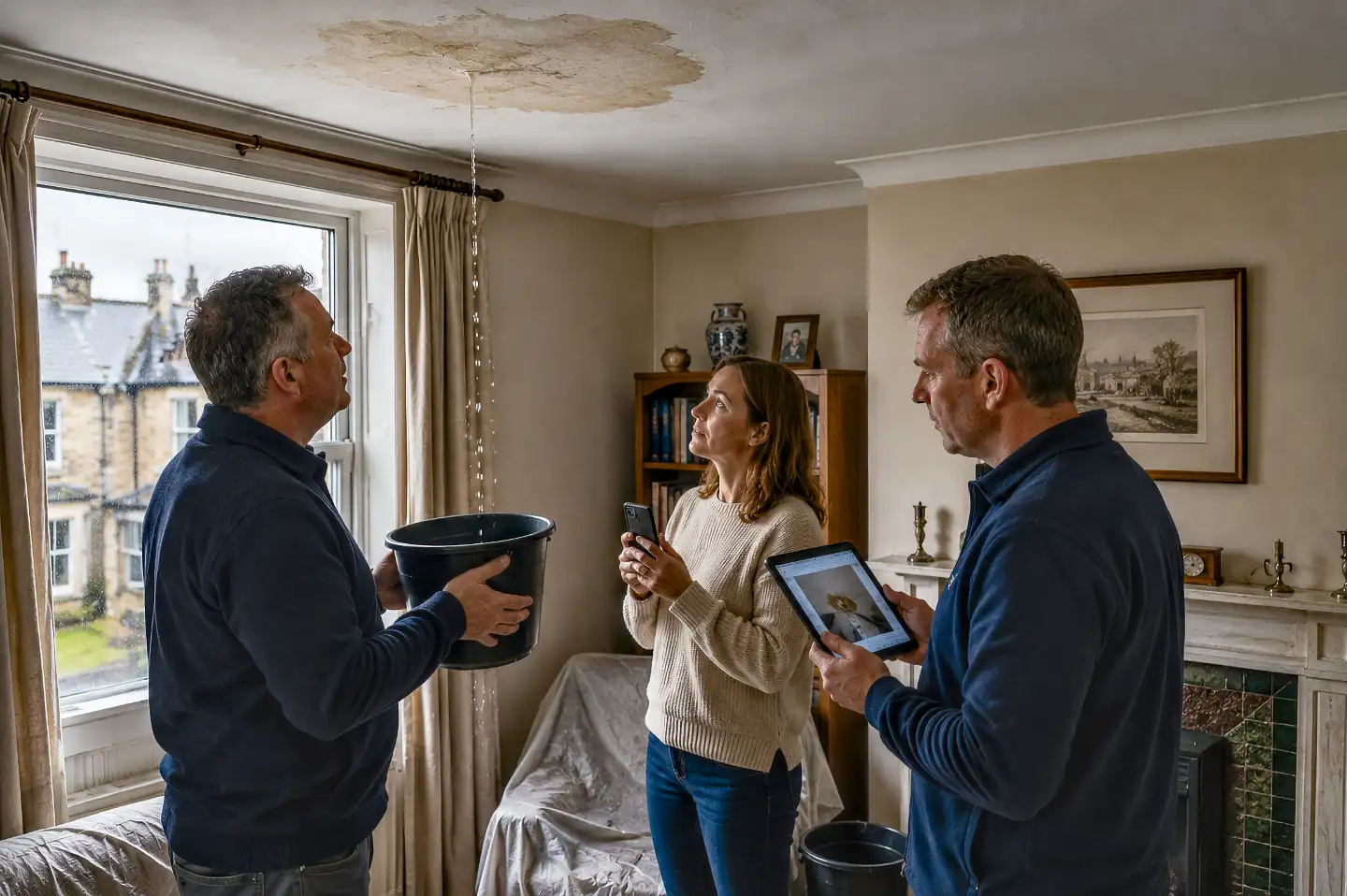
| Displaced ridge tiles, damaged flashing and leadwork | Blocked gutters and poor maintenance |
| Impact damage from branches or debris | Betterment — upgrading the whole roof |
| Internal water damage once the roof is breached | Matching undamaged areas (policy-dependent) |
The word that sinks most storm claims: "wear"
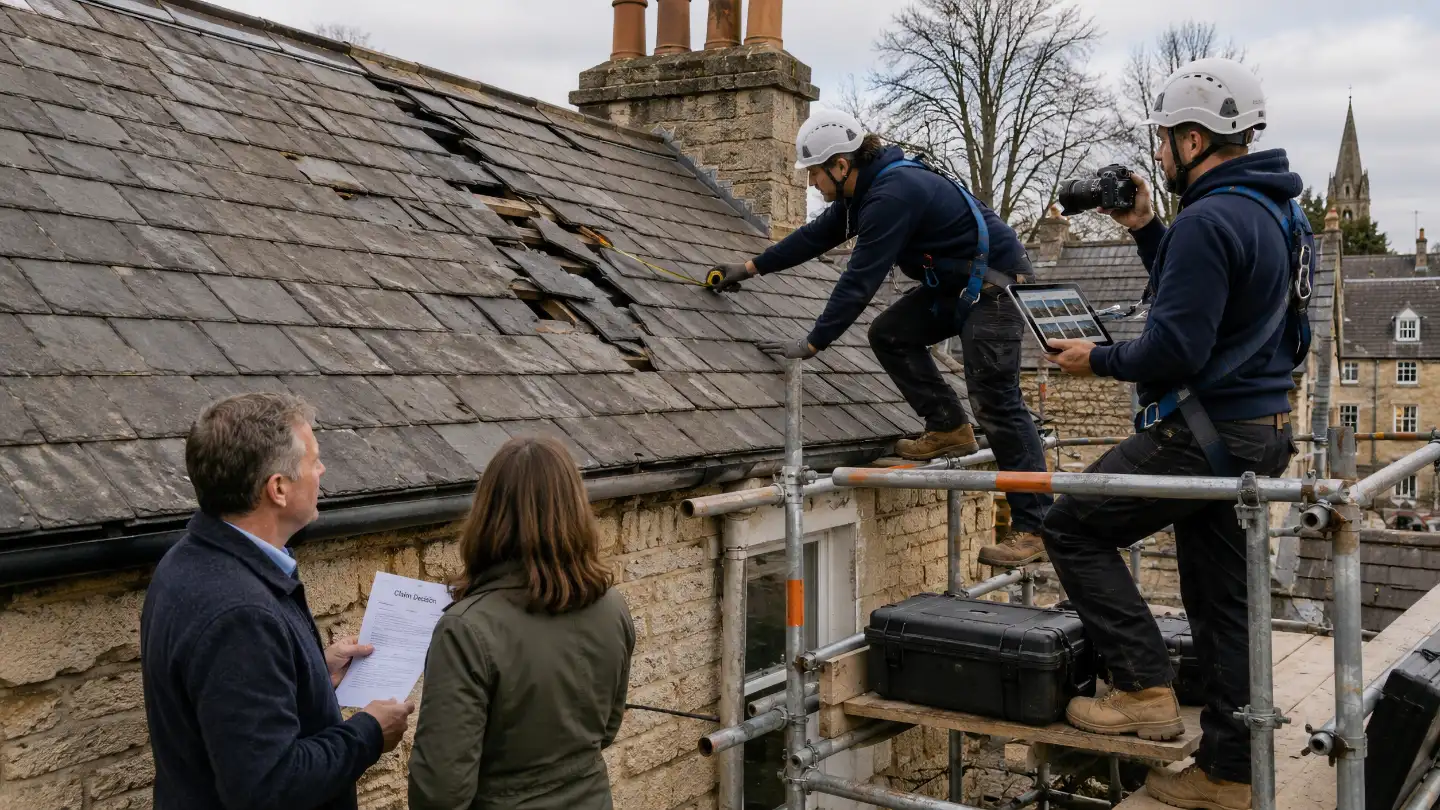
The commonest reason a storm claim gets cut or refused is the insurer deciding the roof was already worn. That's an evidence battle — and a winnable one. Fresh breaks in slate, nail pull-through and tiles lifted in a line with the wind look nothing like slow weathering once someone examines the roof properly rather than glancing from the pavement. Photograph the damage before you make any temporary repair, and capture the neighbours' roofs if they were hit too: matching damage down a street is hard to argue with.
If your claim gets pushed back
Don't treat a "wear and tear" verdict as final — plenty are overturned with the right evidence. And whoever you claim through, the repair is yours to award: you can use your own roofer, not theirs. You can pull the photos and quote into one record with our free storm damage roof claims service in Oxford.