TL;DR: Home insurance covers roof leaks caused by a sudden event like a storm, but not leaks from wear and tear or poor maintenance. The cause decides the claim, not the leak itself — so photograph the damage, get the cause documented, and you'll know where you stand before you call.
Typical 2026 roofing price ranges in Oxford
Use these Oxford price ranges to plan a 2026 roofing budget for the work covered in this guide.
| Roofing service | Typical 2026 price range in Oxford |
|---|---|
| Replace a few slipped tiles | £150–£400 |
| Repoint or repair ridge tiles | £300–£800 |
| Lead flashing repair/replacement (chimney) | £350–£1,200 |
| Chimney repointing or rebuild (upper) | £600–£3,000+ |
| Re-felt and re-tile (nail sickness fix), per slope | £1,500–£4,500 |
| Full re-roof, terraced house | £5,000–£9,000 |
| Full re-roof, semi-detached | £6,000–£15,000 |
| Full re-roof, detached | £9,000–£20,000+ |
| New flat roof (EPDM/GRP) | £80–£150 per m² |
| Gutter clean & check | £80–£200 |
| Replace guttering, fascias & soffits (semi) | £1,500–£4,000 |
These are guide figures for budgeting, not quotes — your roof might sit above or below them. The only way to a firm number is a survey.
Here's the short version: whether your home insurance covers a roof leak has almost nothing to do with the leak, and almost everything to do with what caused it. Insurers cover sudden, one-off events. They don't cover a roof quietly wearing out. Work out which side of that line your leak sits on and you'll know where you stand before you ever pick up the phone.
Covered or not? It comes down to cause
| What caused the leak | Usually covered? |
|---|---|
| Storm — high winds lifting or breaking tiles and slates | Yes |
| Impact — a fallen branch or wind-blown debris | Yes |
| Sudden accidental damage (if you have that cover) | Yes |
| Wear and tear — old fixings, tiles at end of life | No |
| Poor maintenance — blocked gutters, tired flashing, moss | No |
| Gradual damp getting slowly worse over months | No |
Why insurers draw the line there
Buildings insurance is there for the unexpected, not for upkeep. Keeping a roof sound — clearing gutters, replacing the odd slipped slate, sorting flashing before it fails — is the homeowner's job. So when a leak traces back to a job left undone, it's usually declined; when it traces back to a storm on a specific date, it's usually a claim.
On a lot of Oxford housing that line gets blurry. Older North Oxford slate roofs suffer nail sickness, where rusted fixings let slates slip one at a time — that's wear, not weather. But a real gale lifts sound slates too, and from the ground the two can look identical. Flat-roof extensions on the post-war semis around Cowley and Botley are another grey area: split felt at the end of its life isn't covered, but storm-lifted covering can be.
What to do the moment you spot a leak
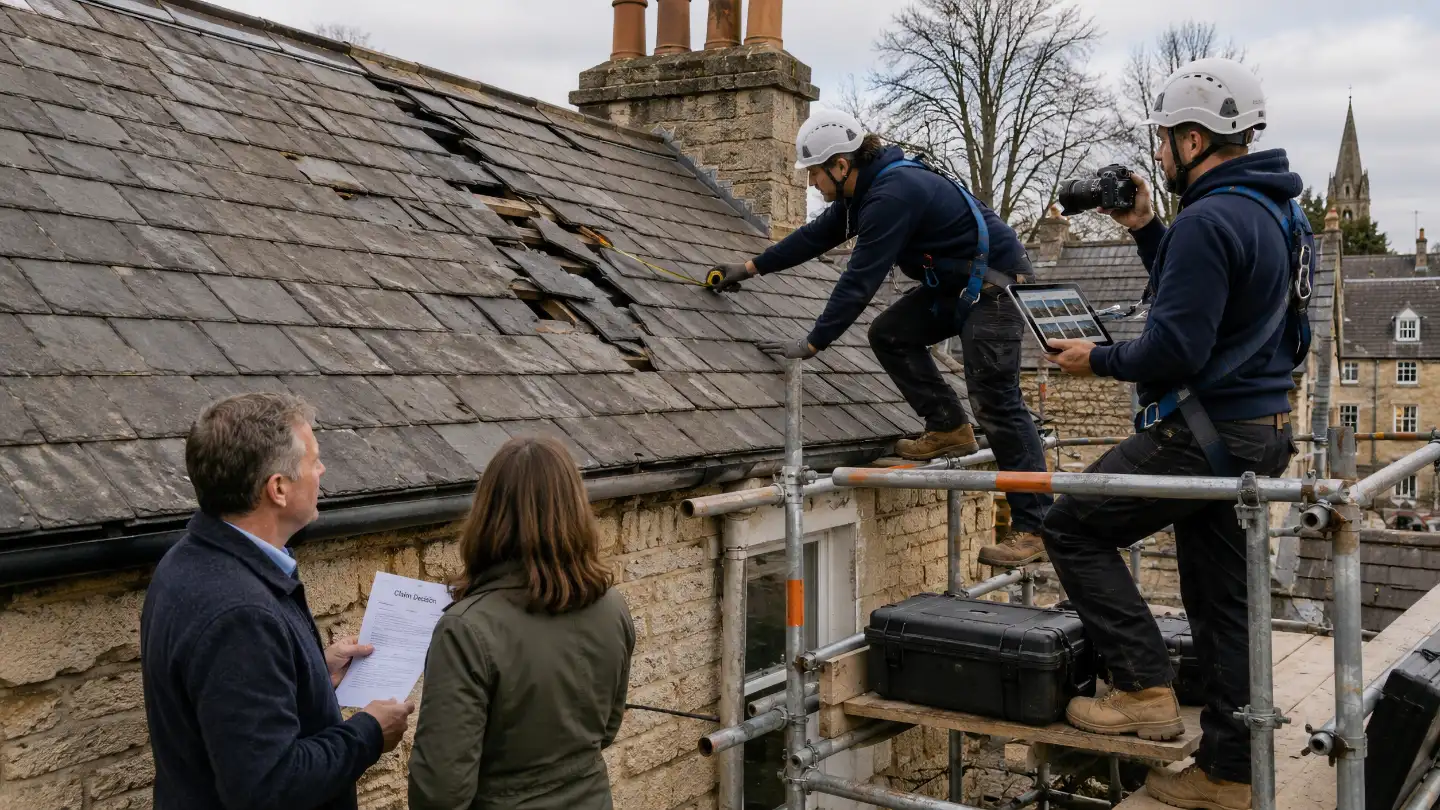
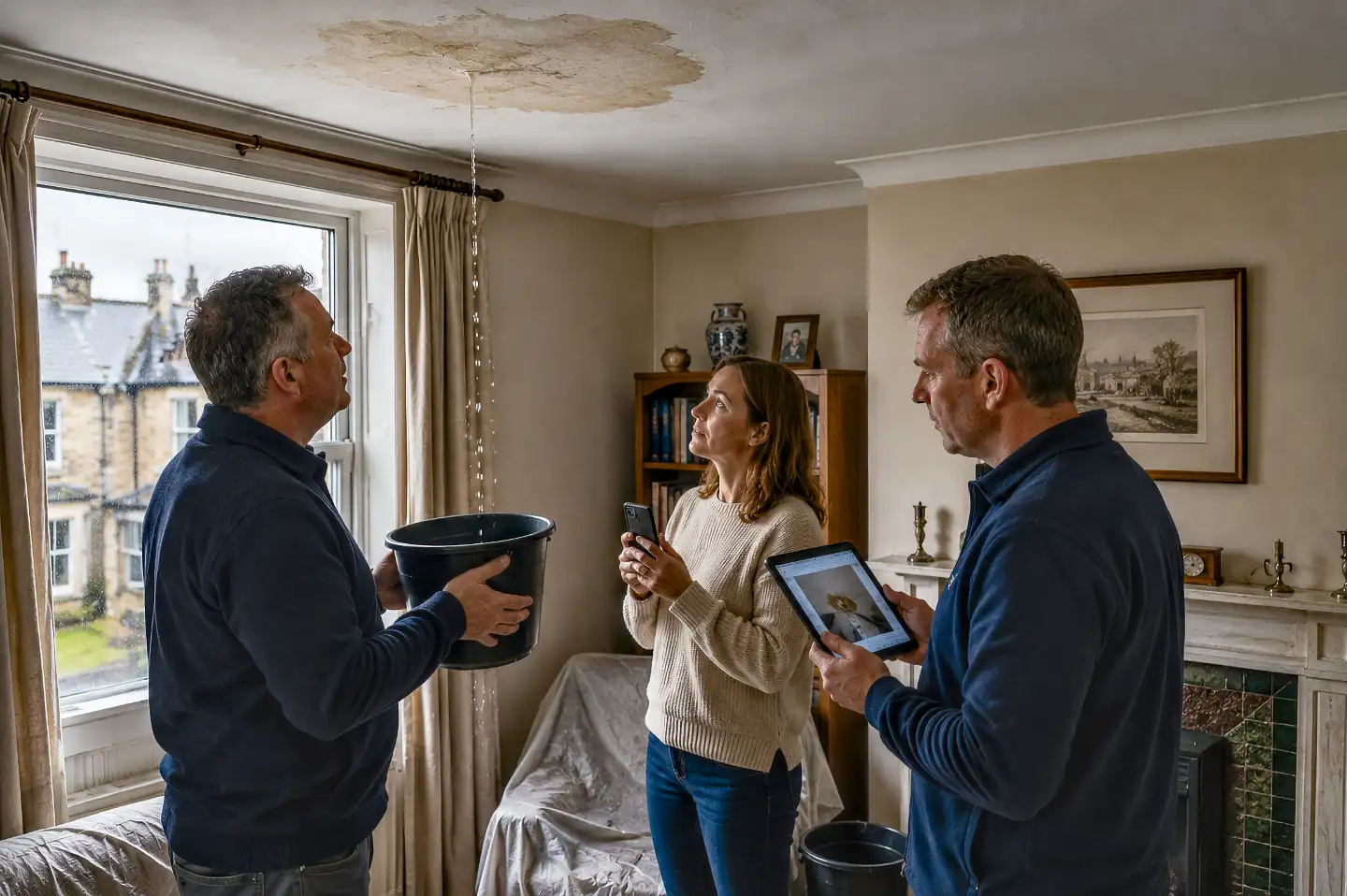
Move anything valuable, catch the water, and get temporary protection up to stop it spreading — keep the receipt, that's usually claimable. Then photograph everything, dated: the damage outside and the staining inside. If you're not sure what caused it, an independent look at the roof will tell you — and that same evidence is exactly what an insurer wants to see — and if the leak is claimable, our full guide to making a roof insurance claim in Oxford covers the next steps. Our free roof insurance claims service in Oxford keeps those photos, quotes and notes together and flags any views you've missed.
If it turns out to be storm-related, it's worth knowing what storm-damage cover does and doesn't stretch to before you claim — and remember the repair is yours to award to whichever roofer you trust.