TL;DR: A declined or underpaid roof claim is often not the end of the road — more than two in five buildings-insurance complaints to the Financial Ombudsman are upheld for the homeowner. Get the reasons in writing, get an independent assessment, rebuild your evidence, and escalate through a formal complaint and the Ombudsman if you need to.
Typical 2026 roofing price ranges in Oxford
Use these Oxford price ranges to plan a 2026 roofing budget for the work covered in this guide.
| Roofing service | Typical 2026 price range in Oxford |
|---|---|
| Replace a few slipped tiles | £150–£400 |
| Repoint or repair ridge tiles | £300–£800 |
| Lead flashing repair/replacement (chimney) | £350–£1,200 |
| Chimney repointing or rebuild (upper) | £600–£3,000+ |
| Re-felt and re-tile (nail sickness fix), per slope | £1,500–£4,500 |
| Full re-roof, terraced house | £5,000–£9,000 |
| Full re-roof, semi-detached | £6,000–£15,000 |
| Full re-roof, detached | £9,000–£20,000+ |
| New flat roof (EPDM/GRP) | £80–£150 per m² |
| Gutter clean & check | £80–£200 |
| Replace guttering, fascias & soffits (semi) | £1,500–£4,000 |
These are guide figures for budgeting, not quotes — your roof might sit above or below them. The only way to a firm number is a survey.
More than two in five buildings-insurance complaints that reach the Financial Ombudsman are upheld in the homeowner's favour. Hold onto that when a letter lands saying your roof claim has been declined: a "no" from your insurer is very often not the final word. Buildings-insurance complaints are at a ten-year high, and "claim declined" is the single most common reason people complain — so a rejection puts you in large, and frequently successful, company.
How the decision really gets made
An insurer — usually through a loss adjuster — is asking one question: was this a sudden, insured event, or a roof gradually wearing out? Storms are covered; age isn't. Nearly every disputed roof claim lives on that line. The catch is that a tired roof and a storm-hit roof look alike from the pavement, and the benefit of the doubt rarely falls your way. On Oxford's older stock especially — North Oxford's Victorian slate terraces, the clay-tiled inter-war semis around Headington and Cowley — an adjuster can point to nail sickness or general age and call the lot "wear and tear," even when a genuine storm lifted the tiles.
Why roofs get turned down
- "Wear and tear" — by far the most common; the roof is judged old rather than storm-hit.
- "Poor maintenance" — blocked gutters, tired flashing or moss cited as neglect (our roofline guide covers keeping on top of it).
- Thin evidence — photos that don't clearly show the cause or the extent.
- Betterment — they'll repair the damaged area, not upgrade the whole roof.
- Excess or exclusions — the loss falls under your excess or outside cover.
- Late reporting — a long gap weakens the link between storm and damage.
The evidence that actually wins roof claims
Across disputed claims, three things do most of the work:
- Dated photographs taken as soon as possible after the storm — before any temporary repair changes the scene.
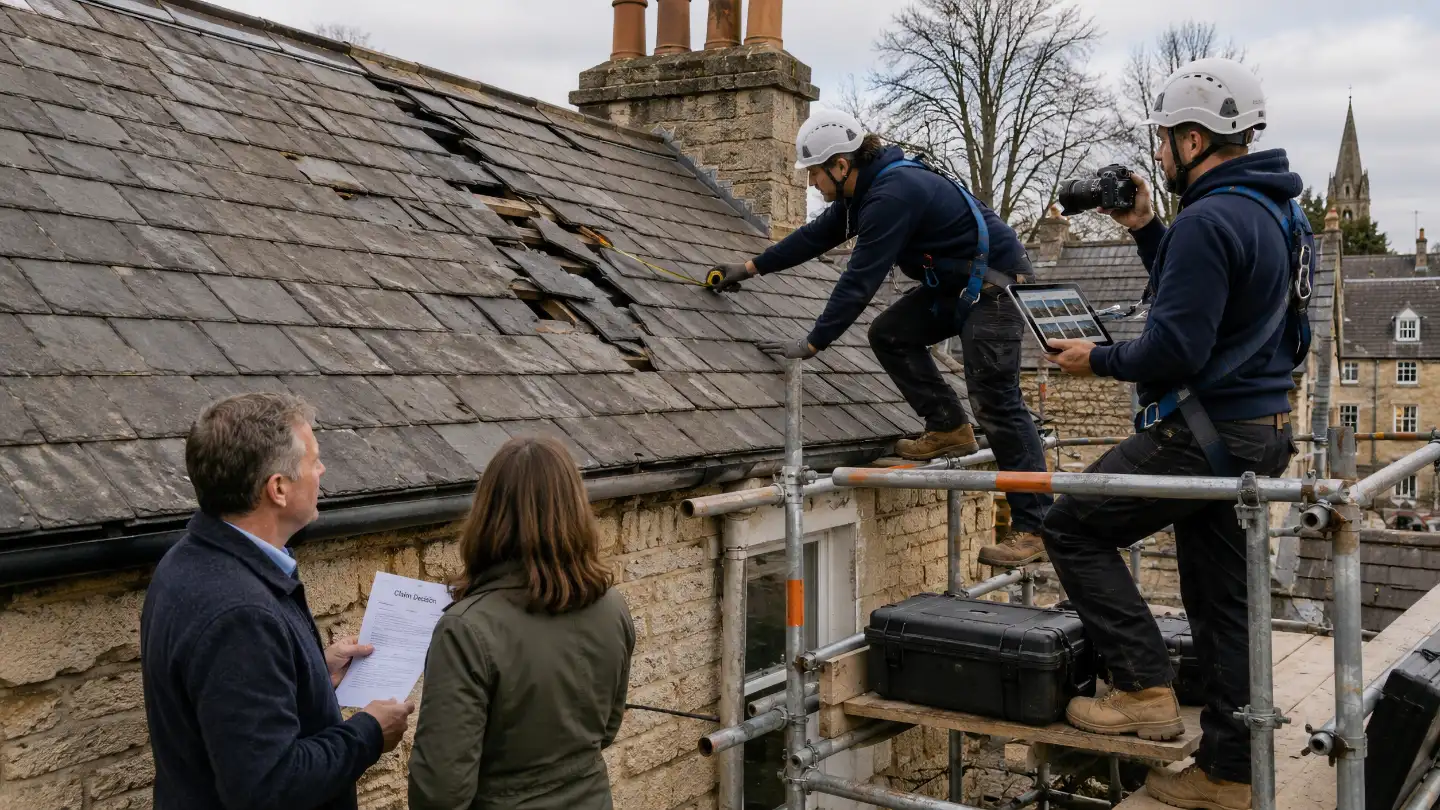
- An independent inspection that explains the cause — fresh breaks, nail pull-through and wind-lift patterns, not old weathering.
- An itemised repair quotation that ties every line back to the storm damage.
Line those up and most "wear and tear" arguments get much harder to sustain. Fresh damage really does look different once a roof is examined properly — bright breaks in otherwise sound slate, tiles lifted in a line with the wind, matching damage on the houses either side — none of which reads the same as slow weathering from ground level.
How likely is a claim to succeed?
Every claim turns on its own evidence, but as a rough guide:
| Situation | Typical likelihood |
|---|---|
| Tiles or slates lifted or missing after a named storm | Strong |
| Chimney or ridge displaced in high winds | Strong |
| Impact damage from a fallen branch or debris | Strong |
| Leak from a roof already at the end of its life | Weak |
| Damage blamed on blocked gutters or neglect | Weak |
| "Wear and tear only", with no storm event | Very weak |
General guidance, not a promise — your policy wording and your evidence decide it.
Turning a rejection around
Get the reasons in writing, including the exact policy term they're relying on. Get the roof looked at properly by an independent roofer. Rebuild the three pieces of evidence above and resubmit. If they still won't move, complain formally — the insurer has eight weeks to respond — then take it, free, to the Financial Ombudsman Service. The Ombudsman upholds a large share of buildings-insurance complaints, and where a loss adjuster was involved it upheld around three-quarters of them.
Storm-damage photo checklist
From the ground — never climb a damaged roof — try to capture:
- The whole affected slope, wide
- Close-ups of every slipped, cracked or missing tile or slate
- The ridge line and any displaced ridge tiles
- Chimney, flashing and leadwork
- Gutters and any debris
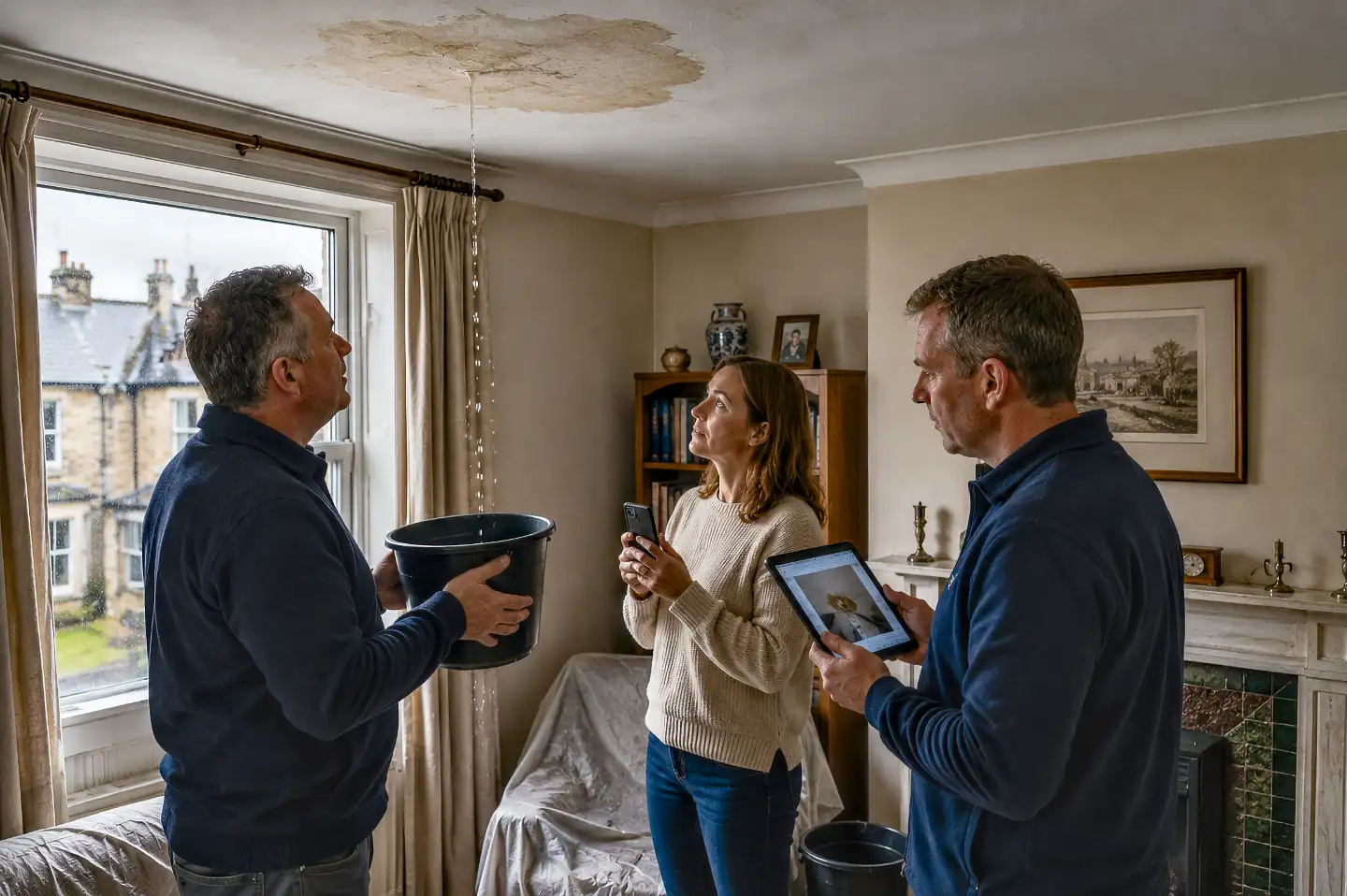
- Interior water staining, dated
- Neighbouring roofs with matching damage
Where this leaves you
A declined claim is a starting position, not a verdict. Get the reasons in writing, get the roof looked at properly, line up the evidence a solid roof insurance claim needs, and use the complaints process if you need to. And whatever happens with the insurer, the repair is yours to award — you can always choose your own roofer. In Oxford and want a straight, independent look at what actually happened to your roof? Start an Oxford roof insurance claim record or call 01865 591801.