
Why roofs leak around chimneys
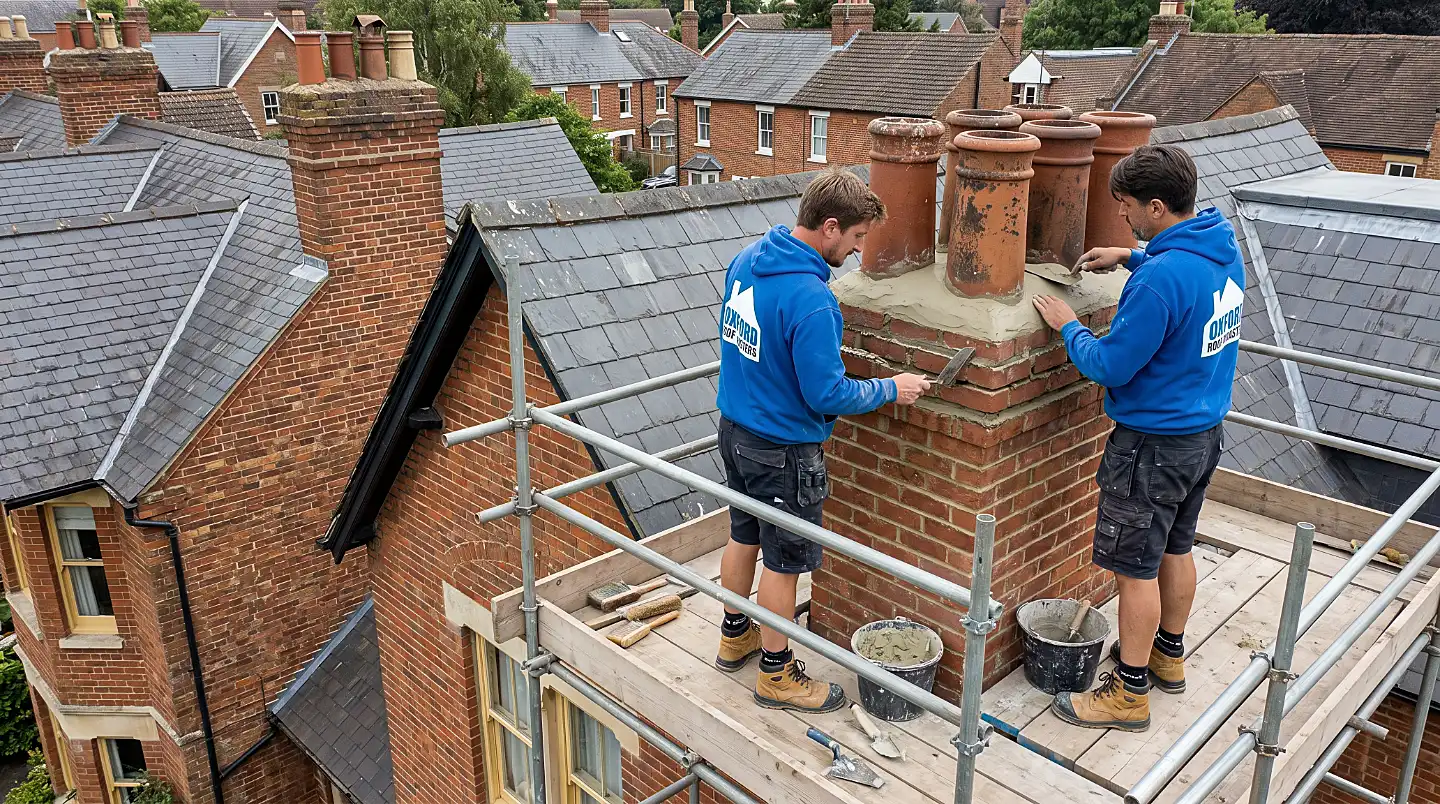
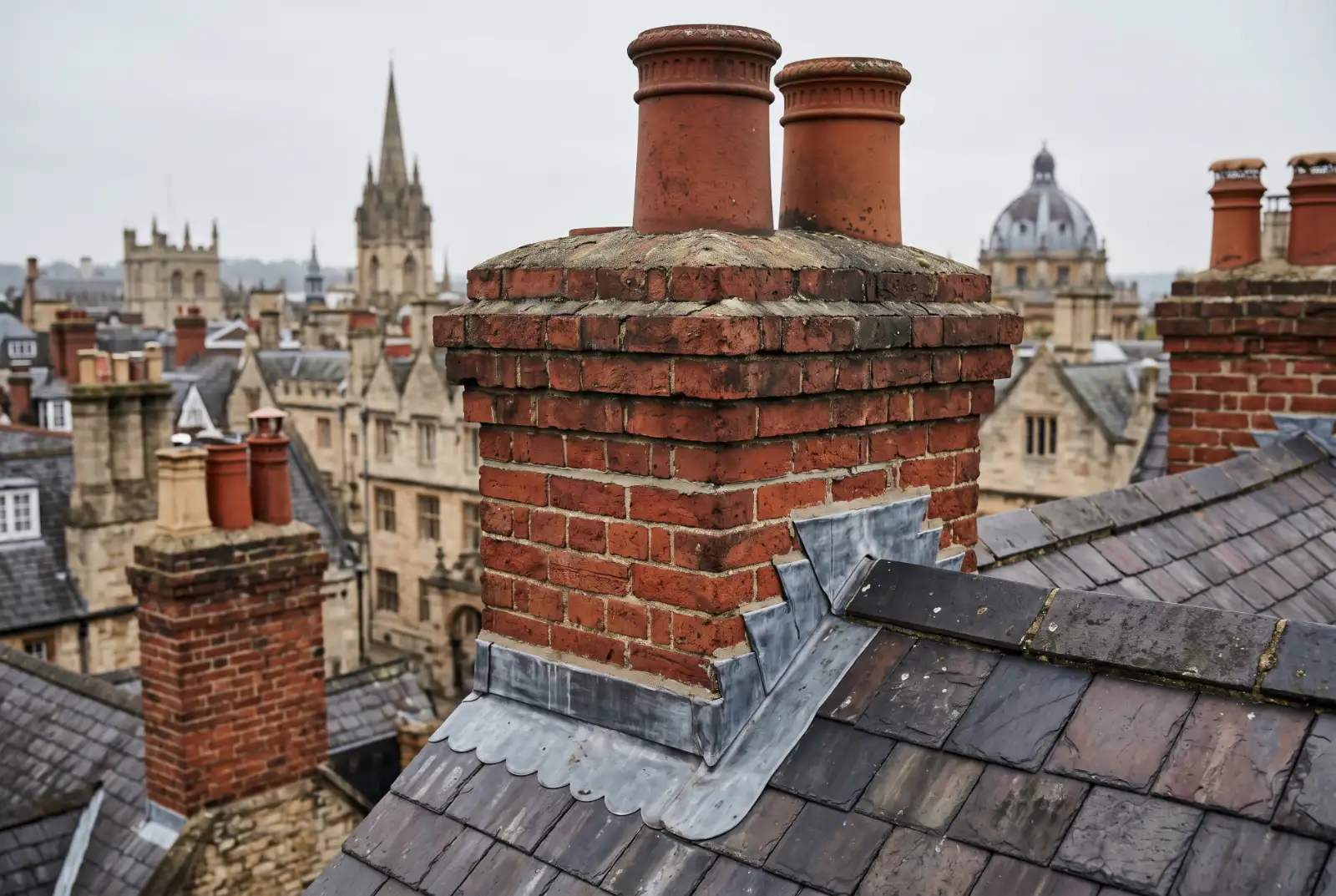
Most chimney leaks aren't caused by the chimney "failing" in the abstract. The junction between a vertical stack and a pitched roof is one of the hardest parts of a building to keep watertight, and it relies on lead flashing and sound mortar. When the lead has lifted, cracked or been badly patched — or the joints holding it have eroded — water tracks behind the flashing and shows up indoors as a ceiling stain or a damp patch by the chimney breast.
Signs your chimney needs attention
Damp marks on the ceiling near the stack. Visibly slipped, cracked or lifted lead (often spottable from the ground with binoculars). Crumbling pointing between bricks. Cracked flaunching (the mortar cap) or leaning brickwork at the top. Mortar falling into the hearth. And smears of silicone or cement from a previous quick fix — bodged repairs are a clue in themselves, covering a defect rather than fixing it.
Flashing repair vs repointing vs rebuild
| Problem | Right repair | Typical cost (2026) |
|---|---|---|
| Failed lead at the roof junction | Flashing repair / replacement in new code-rated lead | £350–£1,200 |
| Eroded mortar joints, stack structurally sound | Repointing + flaunching renewal | £600–£1,500 |
| Weathered upper courses beyond repointing | Partial rebuild of the top of the stack | up to £3,000+ |
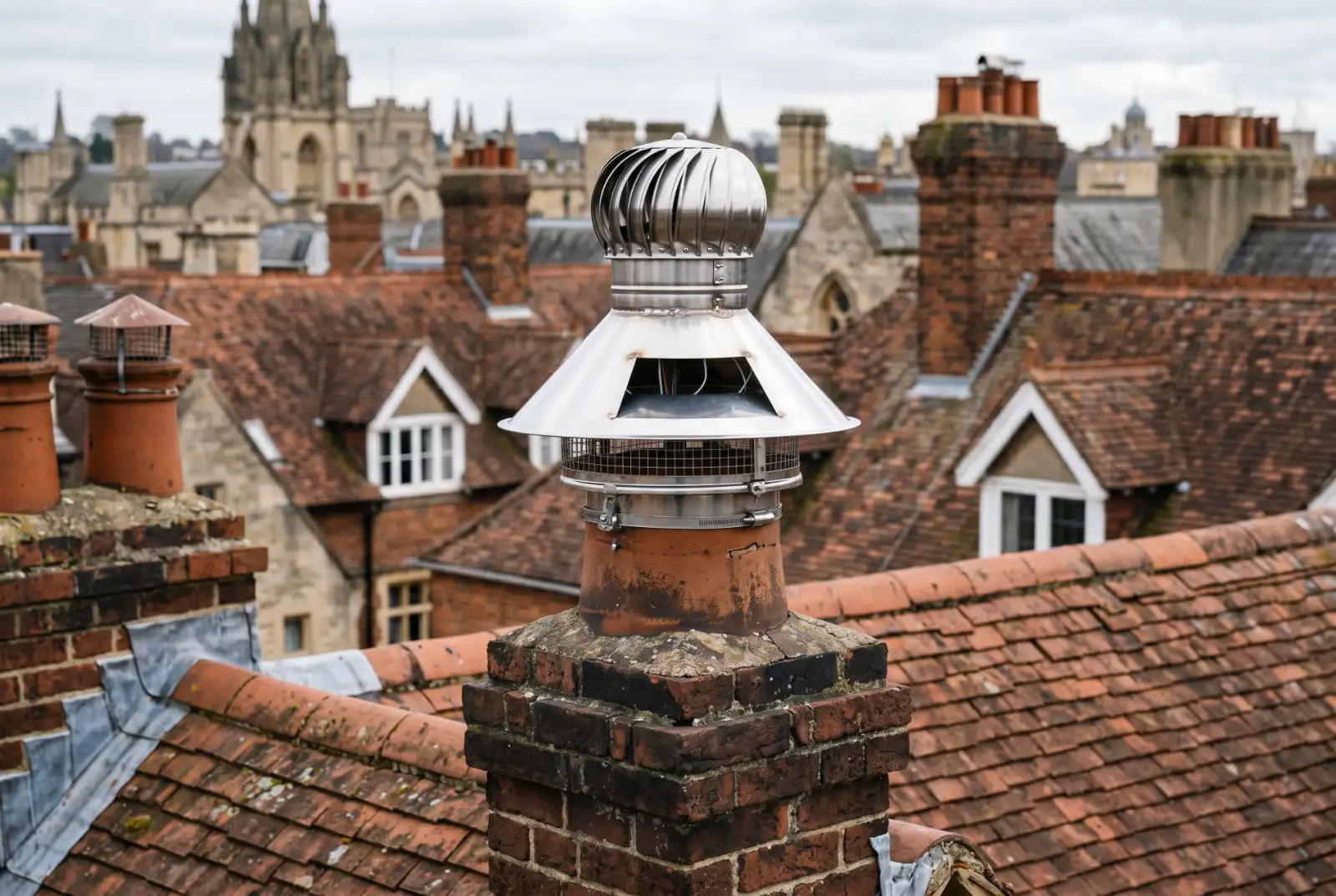
| Disused flue letting water straight down | Ventilated cap / cowl | priced at survey |
| Scaffolding (most chimney work) | Included and itemised in our quotes | £600–£1,500 |
Not every chimney problem needs the same solution — the value in chimney work is diagnosing the right repair, which is what makes a fixed written quote meaningful.
Why mastic is not a real chimney repair
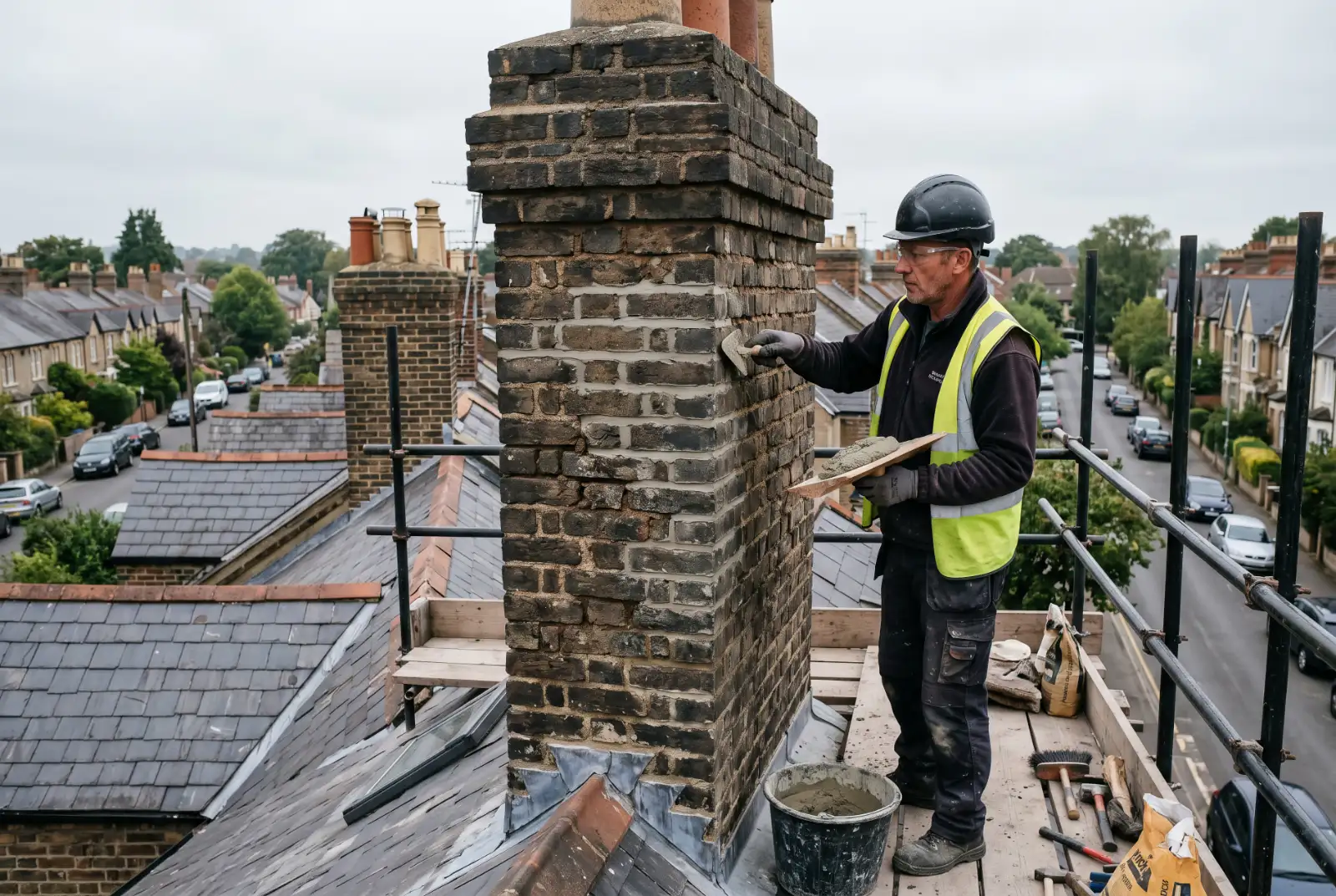
A common shortcut is to smear silicone or cement over failed flashing. It looks reassuring from the ground, but it cracks, traps moisture and usually makes the eventual proper repair harder. Genuine leadwork means removing the defective material and dressing in new code-rated lead, chased into the mortar joints and correctly lapped so water is channelled back onto the tiles. It costs a little more and lasts many times longer — done properly, new leadwork should outlast the surrounding tiles.
Chimney repair costs in Oxford
A straightforward flashing job sits toward the lower end of the £350–£1,200 range. Repointing rises with stack size, access difficulty and the amount of brickwork. Rebuilds cost more again — more labour, more material, more time at height. Scaffolding is the constant: safe work at chimney height needs proper access, so it's standard on most jobs and always itemised in our quotes, never a surprise extra.
Insurance, listed buildings and conservation areas
Storm-dislodged masonry or flashing can qualify as sudden accidental damage under buildings insurance; gradual deterioration is wear and tear. If a storm did the damage, our insurance claims service handles the evidence and paperwork. On heritage properties — and much of central and North Oxford is conservation area, with many listed buildings — like-for-like repairs in matching mortar are generally fine, while altering or removing a stack on a listed building needs consent. We work sympathetically on period chimneys and flag any consent question before work starts.
What we look for during a chimney survey
A proper survey isolates whether the problem is flashing, pointing, flaunching, a cap or cowl issue, or movement in the stack itself — a leak around a chimney is easy to misread, especially when someone has already smeared a "repair" over it. You get the diagnosis, photos, and a fixed written quote for exactly what's needed.