
How much a new flat roof costs in Oxford
| Job | Typical price (2026) |
|---|---|
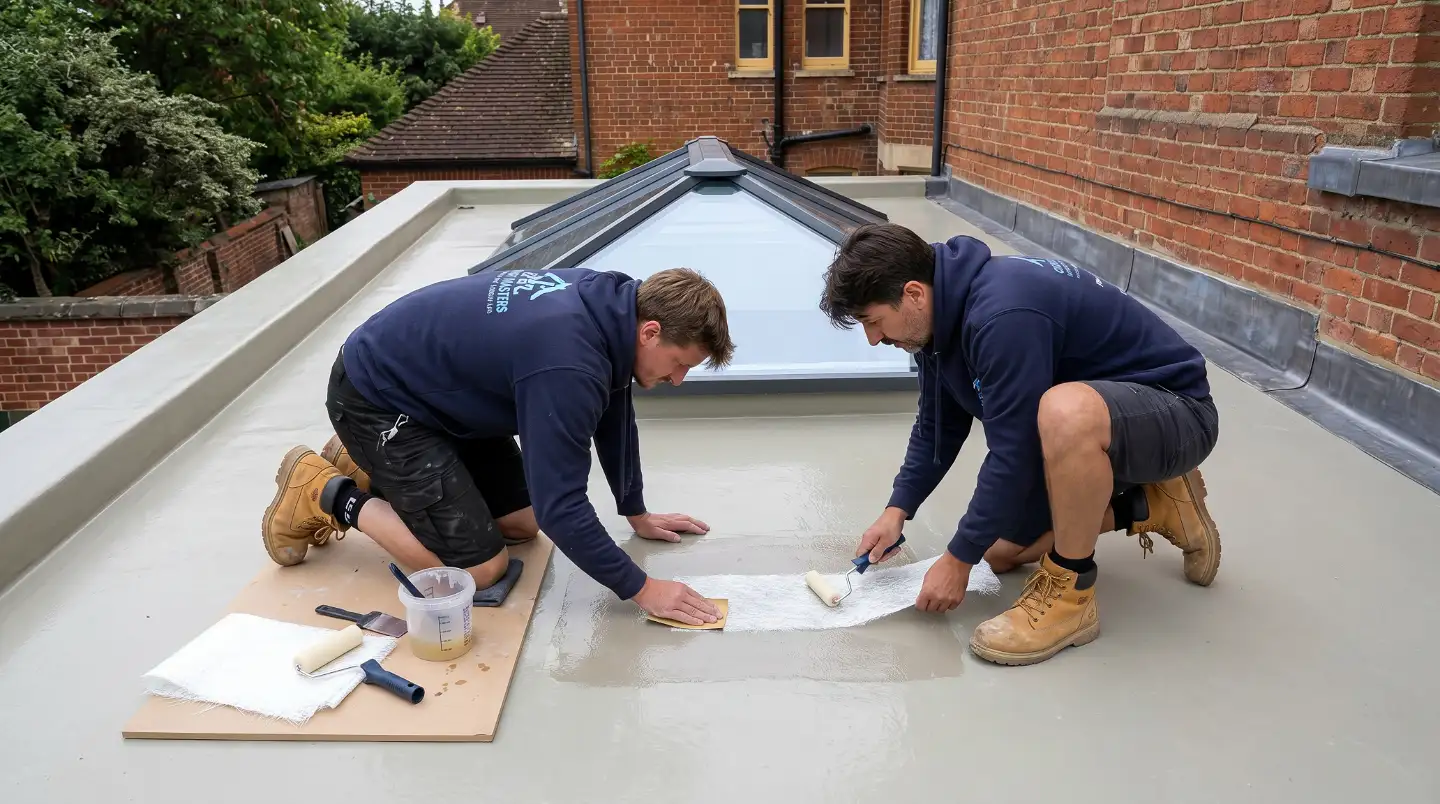
| New flat roof (EPDM or GRP), installed | £80–£150 per m² |
| Typical single garage roof (≈18–20 m²) | roughly £1,600–£3,000 |
| Flat roof repair (patch, upstand or flashing fix) | from £150 |
| Scaffolding, where needed | £600–£1,500 |
Membrane choice is only part of the price. If the deck has sagged, ponding is severe, or old boards have deteriorated, the structure underneath also needs putting right — a premium membrane on a failed deck is not a long-term repair. That's why we survey before we quote, and why the quote is fixed: if the timber needs work, we show you and price it before we start, never during.
EPDM vs GRP vs felt
| EPDM rubber | GRP fibreglass | Torch-on felt | |
|---|---|---|---|
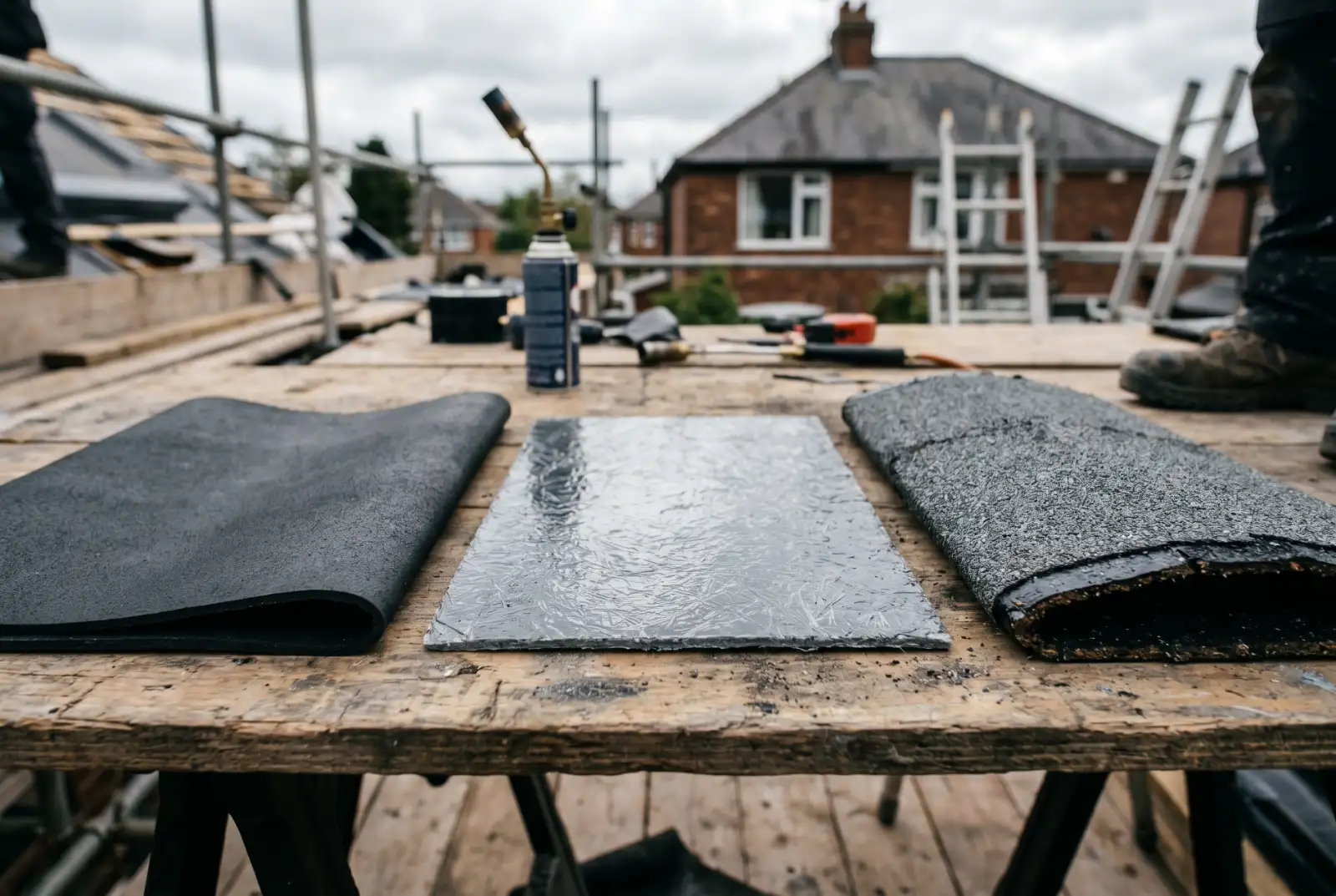
| Lifespan | 30–50 years | 25–40 years | 15–20 years |
| Seams | None — one sheet | None — cured shell | Yes (the usual failure point) |
| Foot traffic | Light maintenance only | Good — balconies, walkways | Poor |
| Installation | Cold-applied, no flame | Needs dry conditions, skilled cure | Hot works (flame) |
| Best for | Garages, extensions, dormers | Walked-on or highly visible roofs | Tight budgets, sheds, outbuildings |
| Value | Best all-round | Premium | Cheapest up front, shortest life |
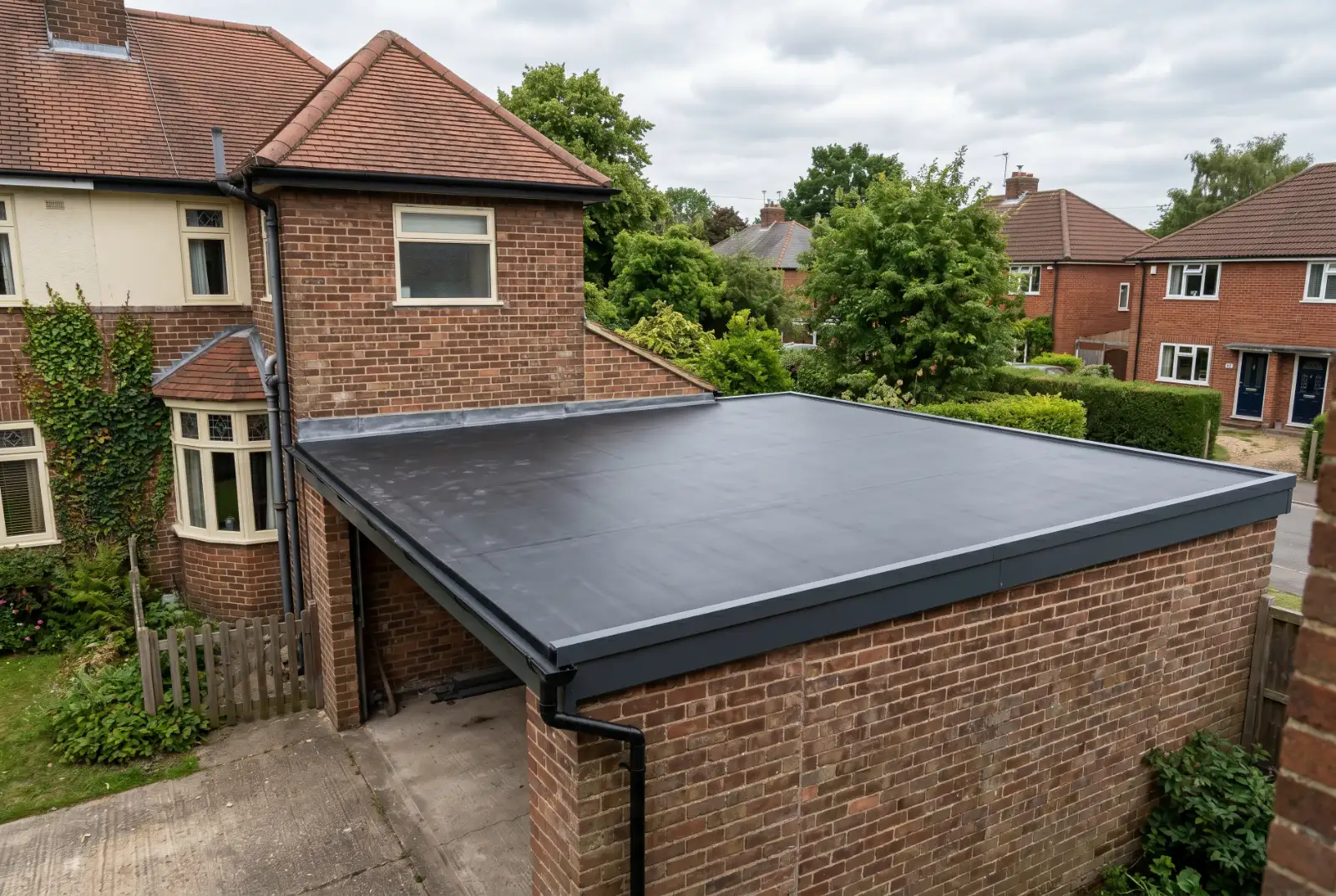
For most Oxford garages, extensions and dormers, EPDM is the most reliable all-round choice: laid in large seamless sheets, it handles temperature change well and avoids the seam weakness that shortens the life of older felt roofs. GRP is the better fit where the roof is visible from upstairs windows or takes foot traffic. Modern felt remains the lower-cost option but has the shortest service life of the three.
Can a leaking flat roof be repaired?
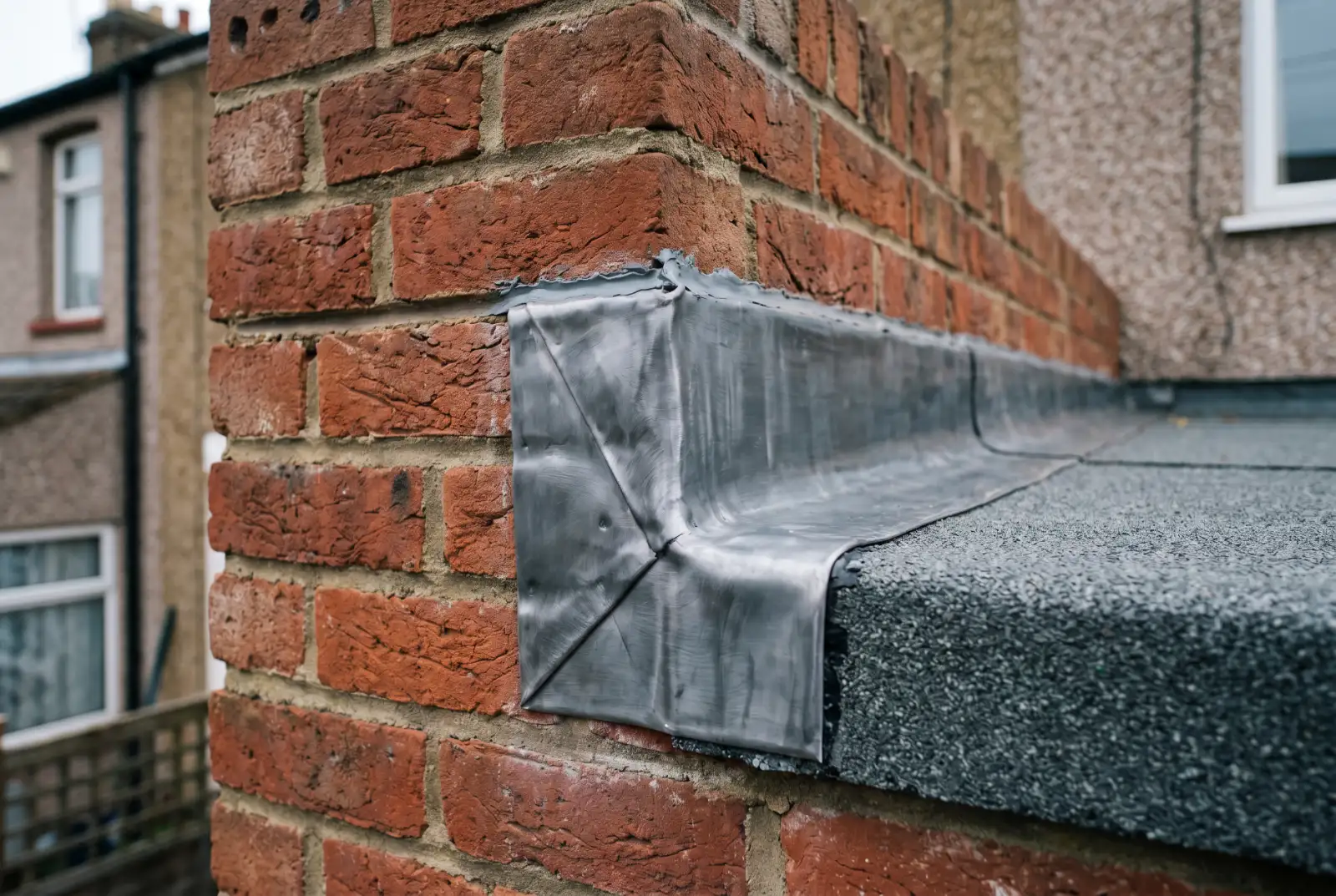
Sometimes, yes. If the problem is limited to one detail — a flashing junction, an upstand, or isolated damage on an otherwise sound roof — repair is often sensible, from around £150. If the roof is an old felt covering leaking in multiple places, replacement is usually the cheaper route over the medium term. We would rather tell you a repair is enough than quote for work you don't need; repeated patching only makes sense if the roof underneath is still fundamentally sound.
Signs your flat roof is ready for replacement
Standing water that remains long after rain. Bubbling or blistering felt. Recurring leaks in different places. Visible cracking, and sagging that suggests the deck or falls have failed. Small, short-lived puddles are common on flat roofs — long-term ponding is not something to ignore, because it accelerates every covering's failure.
What makes a flat roof last
The material matters, but preparation matters more. The longest-lasting flat roofs are built on a sound, correctly prepared deck with proper falls, reliable edge details and well-dressed upstands and flashings. Two roofs in the same membrane can perform very differently — the membrane is only as good as the substrate and detailing beneath it. Our written specification records that preparation before work begins.
Planning and Building Regulations for flat roofs
Like-for-like replacement is usually permitted development — no planning application needed. Building Regulations are the more relevant rulebook: where most of a flat roof covering is renewed, the insulation generally has to be brought up to current standards at the same time. We quote flat-roof renewals with insulation and compliance included, so there are no surprises at sign-off. (New extensions are a separate planning question — see our planning permission guide.)
How we survey and quote
Free survey first: we check the deck, the falls and drainage, the upstands and edge details, and how the roof is used. You get a clear recommendation — repair or replace, and which membrane suits the roof — then a fixed written quote. Most flat roofs we replace in Oxford are the classic local stock: rear additions on Victorian terraces, 1930s garages, and kitchen-extension roofs across Botley, Cowley and East Oxford.