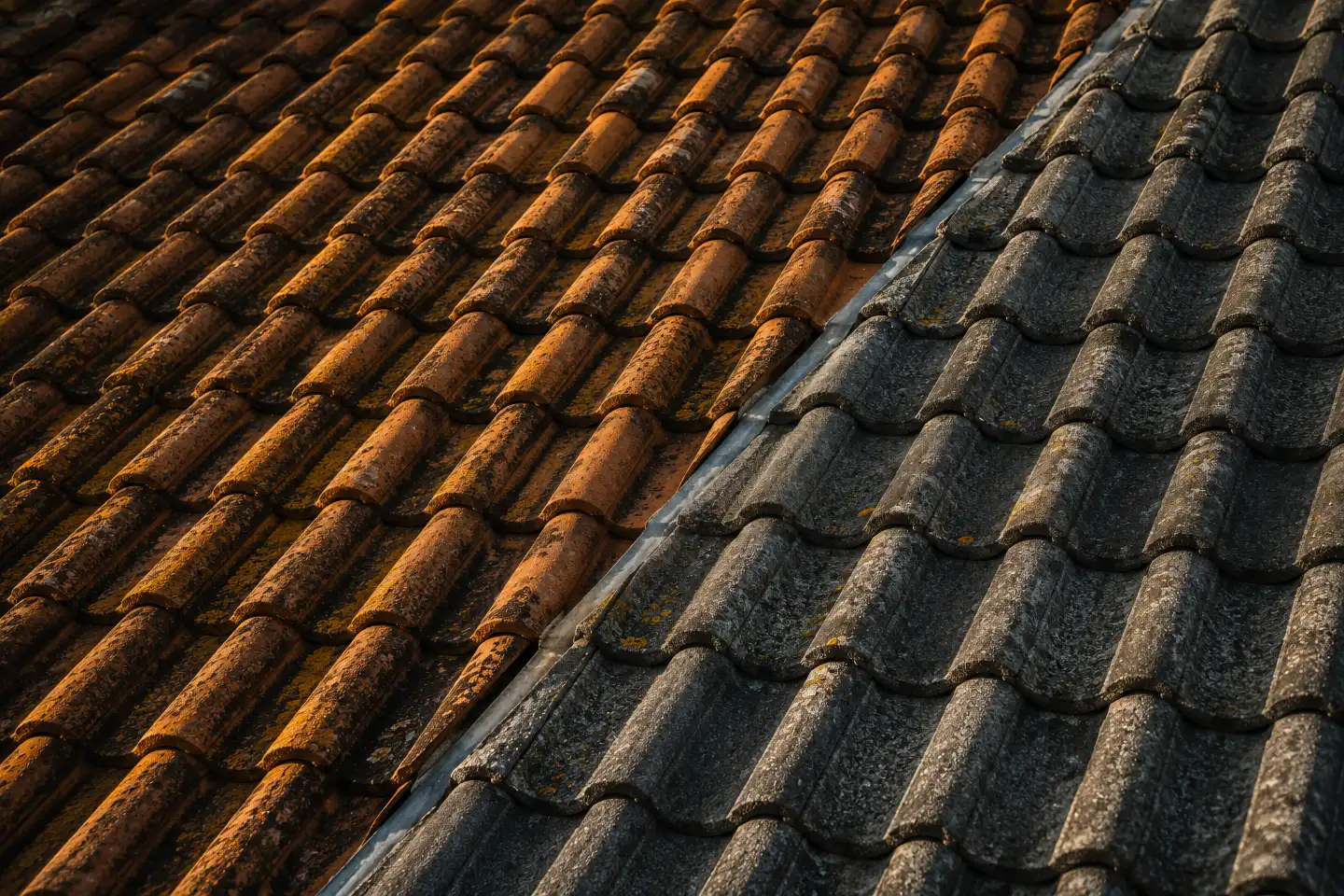
TL;DR: Clay tiles last longest (often 60–100+ years), keep their colour and suit period and conservation-area homes — but cost more and weigh consideration for the structure. Concrete tiles are cheaper, strong and versatile, lasting 30–50 years, but can fade and are heavier. For most Oxford re-roofs the choice comes down to budget, the look you want, and whether you're in a conservation area.
Typical 2026 tiled re-roof prices in Oxford
Use these Oxford price ranges to plan a 2026 roofing budget for the work covered in this guide.
| Roofing service | Typical 2026 price range in Oxford |
|---|---|
| Full re-roof, terraced house | £5,000–£9,000 |
| Full re-roof, semi-detached | £6,000–£15,000 |
| Full re-roof, detached | £9,000–£20,000+ |
These are guide figures for budgeting, not quotes — your roof might sit above or below them. The only way to a firm number is a survey.
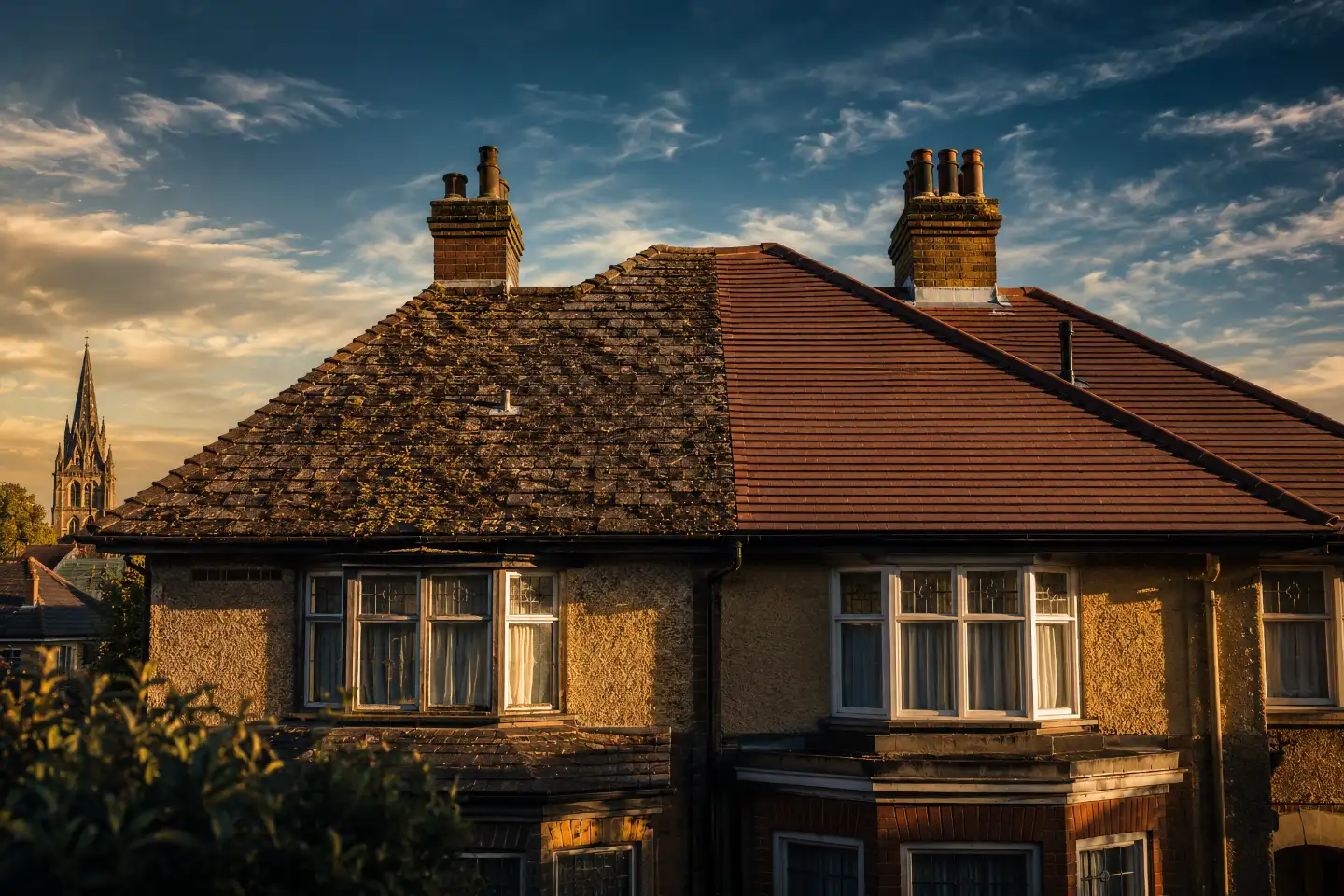
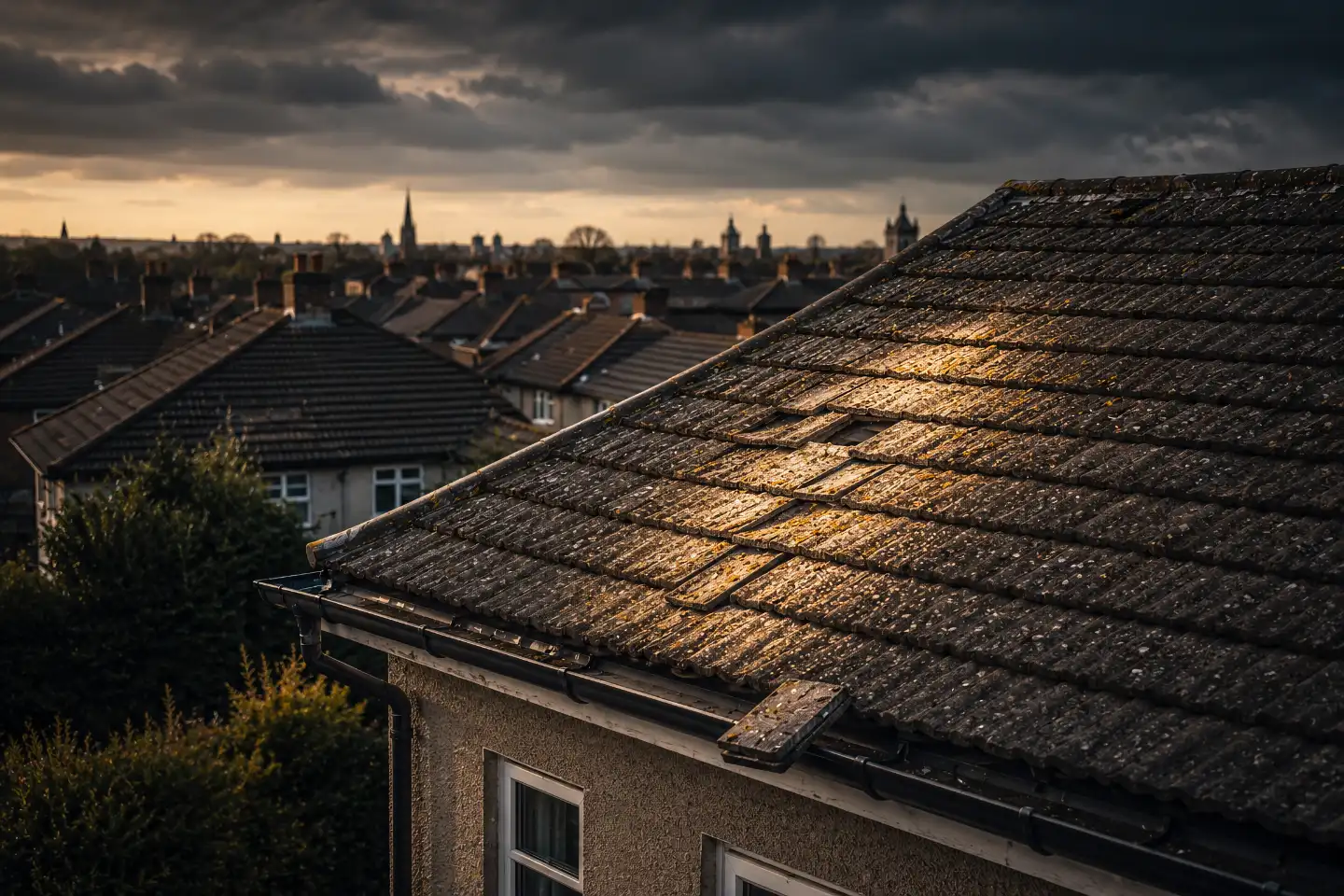
If you're re-roofing an Oxford home, tile choice shapes both how it looks and how long it lasts. Clay and concrete are the two mainstays. Here's a straight comparison.
Clay tiles
Fired from natural clay, these are the traditional tile of much of England. They're prized for a warm, natural colour that's baked through — so it doesn't fade — and they age gracefully, developing character over decades.
- Lifespan: 60–100+ years.
- Look: warm, natural, colour-fast; ideal for period and heritage streets.
- Pros: exceptional longevity, fade-resistant, low maintenance, often required or preferred in conservation areas.
- Cons: higher up-front cost; more brittle to walk on; quality matters.
Concrete tiles
Made from sand, cement and pigment, concrete tiles became the UK default in the 20th century. They're strong, widely available in many profiles, and cost noticeably less.
- Lifespan: 30–50 years.
- Look: wide range of profiles and colours; surface colour can fade over time.
- Pros: lower cost, robust, versatile, readily matched.
- Cons: heavier (structure must suit), colour fades, shorter life than clay.
The factors that decide it
Your street and any conservation rules
In Oxford's conservation areas and on period terraces, clay (or natural slate) is often the right — and sometimes required — choice to match the character. Our planning permission guide explains when materials are restricted.
Structure and weight
Concrete tiles are heavier. On most homes the roof structure copes, but if you're switching material or the timbers are older, a roofer will check the structure suits the load.
Budget vs lifetime cost
Concrete is cheaper today; clay can outlast two concrete roofs, so over the very long term the gap narrows. Match the choice to how long you plan to stay and the look you want.
Want help choosing the right tile for your street? We'll show you options that suit your home and any conservation rules. Get a free re-roof quote or call 01865 591801.
What about slate?
Many of Oxford's Victorian and Edwardian homes were originally slate, not tile. Natural slate is the premium heritage option — beautiful and extremely long-lived — and is often expected in conservation areas on slate-roofed streets. If your home was built with slate, replacing like-for-like is usually the right call both aesthetically and for planning.
Our honest recommendation
For a heritage or conservation-area home, clay or slate protects both the look and the value, and the longevity justifies the cost. For a 20th-century semi where budget matters and the street is mixed, quality concrete tiles are a sound, cost-effective choice. Whatever you choose, fixing them with stainless nails over a breathable membrane is what makes the roof last — see why in our nail sickness guide. Every re-roof we lay is covered by our 10-year workmanship guarantee.