
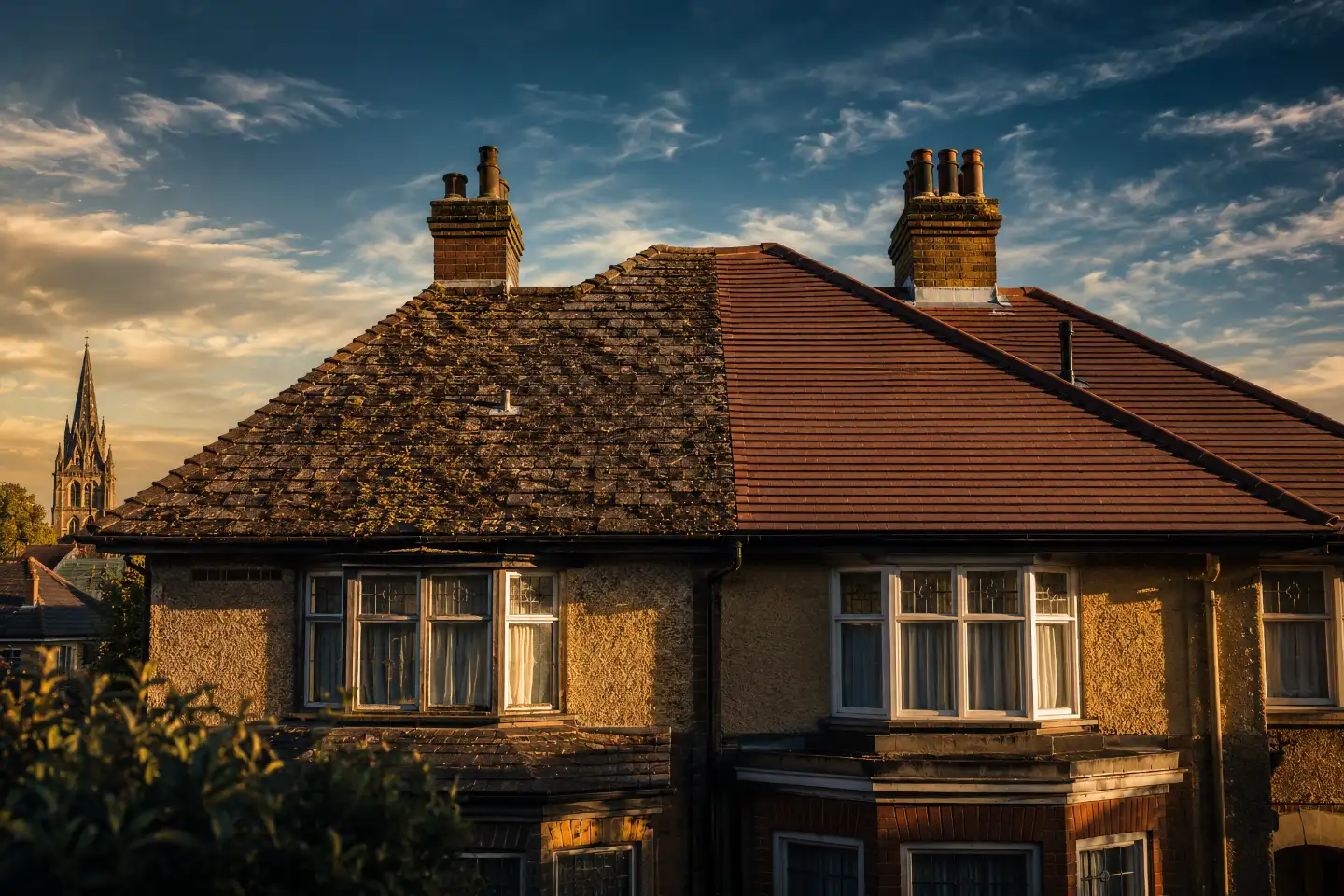
TL;DR: Repeated leaks in different spots, widespread nail sickness, a sagging roofline, daylight in the loft, and an age over 25–30 years all point towards re-roofing rather than another patch. A free survey is the only way to know for certain — and there's no obligation to book the work.
Typical 2026 roof repair and replacement prices in Oxford
Use these Oxford price ranges to plan a 2026 roofing budget for the work covered in this guide.
| Roofing service | Typical 2026 price range in Oxford |
|---|---|
| Replace a few slipped tiles | £150–£400 |
| Lead flashing repair/replacement (chimney) | £350–£1,200 |
| Re-felt and re-tile (nail sickness fix), per slope | £1,500–£4,500 |
| Full re-roof, terraced house | £5,000–£9,000 |
| Full re-roof, semi-detached | £6,000–£15,000 |
| Full re-roof, detached | £9,000–£20,000+ |
| New flat roof (EPDM/GRP) | £80–£150 per m² |
These are guide figures for budgeting, not quotes — your roof might sit above or below them. The only way to a firm number is a survey.
"Should I repair it or replace it?" is the single most common question we're asked in Oxford. Spending money patching a roof that's failing all over is throwing good money after bad — but replacing a roof that just needs a few tiles is an expensive mistake too. Here are the seven signs we look for.
1. You're getting leaks in more than one place
A single leak is a repair. Leaks appearing in different rooms, or new ones after every storm, usually mean the roof covering has reached the end of its service life. Once water is finding several paths in, sealing one only reveals the next.
2. Widespread nail sickness
On Oxford's 1930s–1970s housing — think Marston, Cowley, Blackbird Leys and Barton — the original nails holding the tiles corrode over time, a condition known as nail sickness. A handful of slipped tiles can be re-fixed. When tiles are slipping across the whole roof, the fixings have failed everywhere and re-roofing is the honest answer.
3. The roofline is sagging
Stand across the road and look along the ridge. It should be dead straight. A visible dip or sag points to a problem with the timber structure underneath — often damp-rotted rafters or battens — and that's never a job for a few replacement tiles.
4. Daylight or damp in the loft
Go into the loft on a bright day with the light off. Pinpricks of daylight mean gaps in the covering. Damp timbers, dark staining, or crumbling felt that drops grit when you touch it all suggest the roof is no longer keeping weather out as it should.
5. Flashing that keeps failing
Lead flashing seals the joins around chimneys, valleys and abutments. If it's been resealed repeatedly and still lets water in, or the lead is cracked and tired across the roof, replacing it as part of a re-roof is more cost-effective than chasing leaks. (More in our lead and chimney guide.)
6. Your roof is 25+ years old
Concrete tiles last around 30–50 years, natural slate much longer, felt flat roofs often just 15–20. If your covering is original and decades old, age alone doesn't force a replacement — but combined with any of the signs above, it tips the balance.
7. Moss, plant growth and crumbling tiles
Heavy moss holds moisture against the tiles and speeds up frost damage; tiles that are flaking, delaminating or shedding granules are physically breaking down. A scatter of moss is cosmetic. Widespread deterioration is structural.
Not sure which camp your roof is in? Book a free, no-obligation roof survey — we'll give you an honest verdict in writing. Request your free survey or call 01865 591801.
What a re-roof actually involves
A full re-roof means stripping the old covering, checking and repairing the timber, fitting modern breathable membrane and new battens, then laying new tiles or slate with stainless fixings. For a typical Oxford semi it usually takes 3–5 days, including scaffolding. You can read realistic figures in our 2026 Oxford roof cost guide.
Repair or replace — the honest test
Our rule of thumb: if the problems are isolated and the structure is sound, repair. If failures are spread across the whole roof, or the timber is moving, replace. A reputable roofer will always tell you when a repair is the smarter spend — and a 10-year guarantee on a new roof should give you decades of peace of mind. Learn how to spot a trustworthy contractor in our guide to choosing a roofer in Oxford.