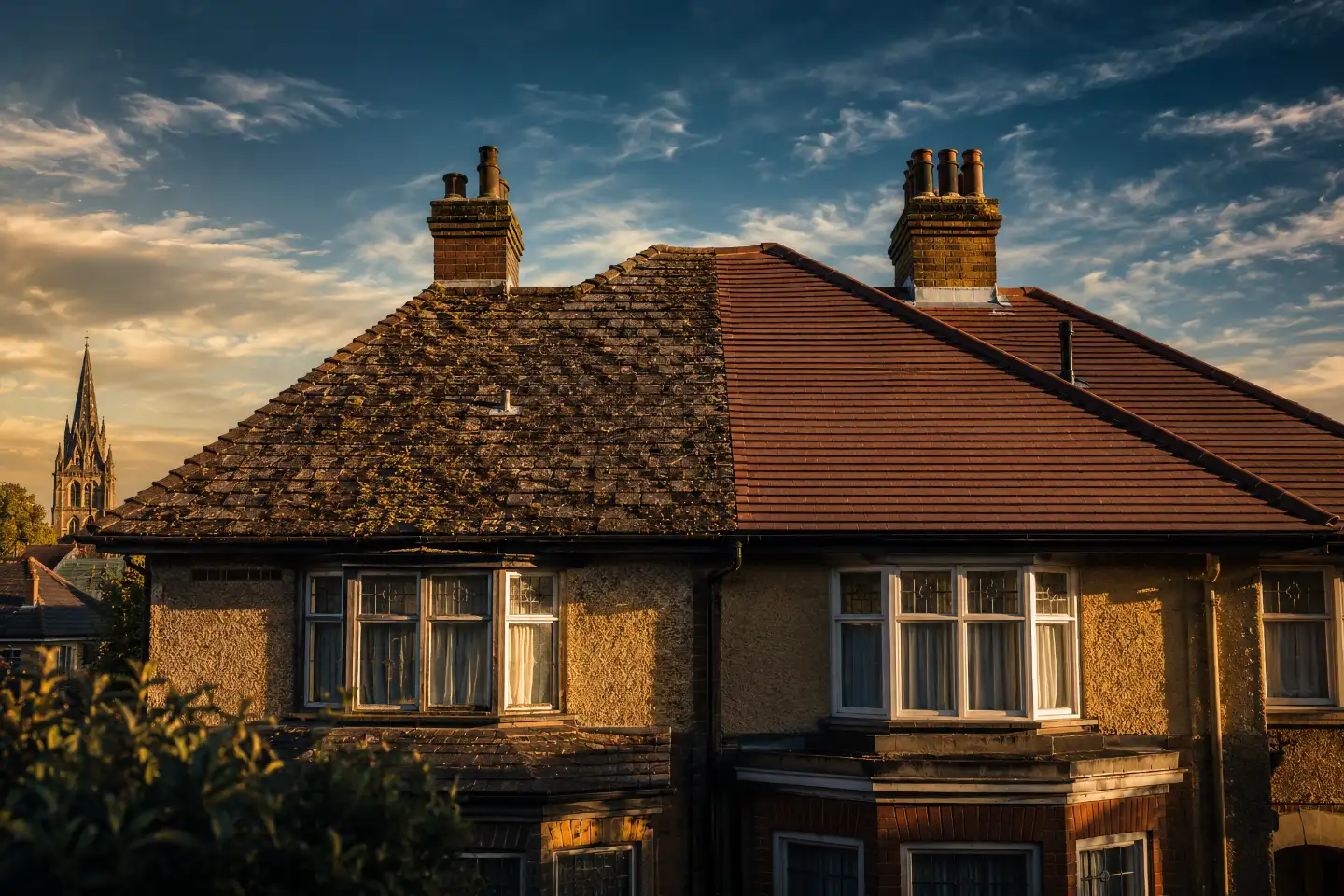

TL;DR: Check your roof from the ground each season with binoculars, clear gutters in autumn and after storms, look for slipped tiles and damp in the loft, and keep moss and overhanging branches in check. Most of this is safe to do yourself; anything on the roof itself is a job for a roofer. Prevention is far cheaper than emergency repairs.
Typical 2026 roof maintenance and repair prices in Oxford
Use these Oxford price ranges to plan a 2026 roofing budget for the work covered in this guide.
| Roofing service | Typical 2026 price range in Oxford |
|---|---|
| Replace a few slipped tiles | £150–£400 |
| Repoint or repair ridge tiles | £300–£800 |
| Lead flashing repair/replacement (chimney) | £350–£1,200 |
| New flat roof (EPDM/GRP) | £80–£150 per m² |
| Gutter clean & check | £80–£200 |
These are guide figures for budgeting, not quotes — your roof might sit above or below them. The only way to a firm number is a survey.
A roof rarely fails overnight. The leak that ruins a ceiling usually started months earlier as a slipped tile or a blocked gutter that nobody noticed. Twenty minutes a season, mostly from the ground, can save you thousands. Here's the routine.
A safety note first
You can do almost all of this safely from the ground with a pair of binoculars, and from inside your loft. Please don't climb onto the roof. If something needs a closer look or a fix, that's what a roofer with proper access is for — and our call-outs are free.
Autumn (the most important)
- Clear the gutters of leaves and debris — Oxford's mature trees fill them fast. Blocked gutters cause damp walls and roofline rot. See our guttering guide.
- Check downpipes flow freely in heavy rain.
- Scan for slipped or missing tiles before winter storms find them.
- Cut back overhanging branches that could drop or scrape in high winds.
Winter
- After every storm, scan the roof from the ground for displaced tiles and check the loft for fresh damp. Oxfordshire takes a regular battering from named storms.
- Watch for ice and water marks appearing on ceilings — act early.
- Keep an eye on flat roofs for ponding water that doesn't drain.
Spring
- Inspect after the winter for any damage the cold caused — cracked tiles, loose flashing, frost-damaged mortar.
- Check the loft in daylight for pinpricks of light or damp staining.
- Treat or remove heavy moss — it traps moisture and accelerates frost damage. Light moss is cosmetic; thick growth is worth addressing.
Summer
- Best time for any repairs — dry, settled weather makes roof work easier and is ideal for flat-roof renewals.
- Check pointing and flashing around the chimney while you can see clearly. See our lead and chimney guide.
- Book a professional inspection if your roof is over 20 years old or you've spotted anything unusual.
Spotted something on your seasonal check? A free inspection now is far cheaper than an emergency later. Book a free roof check or call 01865 591801.
The quick all-year checklist
- Gutters and downpipes clear and flowing.
- No slipped, cracked or missing tiles.
- Flashing around chimney and valleys intact.
- Ridge tiles secure and pointing sound.
- No damp, daylight or sagging in the loft.
- No heavy moss or plant growth.
- Flat roofs draining, not ponding.
- Overhanging branches trimmed back.
Why it pays off
A gutter clean or a single replaced tile costs very little. The damp wall, rotten timber or collapsed ceiling that follows months of neglect costs a great deal — and insurers may refuse a claim if a roof wasn't maintained (more in our insurance guide). Catching problems early is the single best thing you can do for your roof and your budget.
Gutters due a clean? Our gutter cleaning and repair in Oxford service starts from £80 for a whole-house clean and check — the cheapest job on this list, and the one that prevents the expensive ones.