TL;DR: Sudden roof damage — such as storm damage, a fallen branch, impact damage or lightning — is usually covered by buildings insurance. Gradual wear and tear, old materials, nail sickness or poor maintenance usually are not. Before you carry out permanent repairs, make the roof safe, photograph everything, report the claim promptly and get a professional roof damage assessment.
Typical 2026 roof damage repair prices in Oxford
Use these Oxford price ranges to plan a 2026 roofing budget for the work covered in this guide.
| Roofing service | Typical 2026 price range in Oxford |
|---|---|
| Replace a few slipped tiles | £150–£400 |
| Repoint or repair ridge tiles | £300–£800 |
| Lead flashing repair/replacement (chimney) | £350–£1,200 |
| Chimney repointing or rebuild (upper) | £600–£3,000+ |
| Re-felt and re-tile (nail sickness fix), per slope | £1,500–£4,500 |
These are guide figures for budgeting, not quotes — your roof might sit above or below them. The only way to a firm number is a survey.
If you have just discovered roof damage after bad weather, the first thing to do is not panic. A missing tile, a leak through the ceiling or a fallen branch on the roof can feel urgent — and sometimes it is — but rushing into full repairs before the damage has been properly documented can make an insurance claim harder than it needs to be.
Most roof insurance problems do not happen because the homeowner has done something deliberately wrong. They happen because the order of events is wrong. The damage gets cleared away too quickly, photographs are missed, the insurer is called without enough information, or permanent repair work starts before anyone has assessed the cause properly.
That is where claims often become frustrating. The insurer wants to know whether the damage was sudden and accidental, or whether it was caused by age, deterioration or lack of maintenance. A homeowner simply wants the leak stopped and the roof put right. The gap between those two positions is where evidence matters.
This guide explains how roof insurance claims usually work, what insurers are likely to look for, what to photograph, what mistakes to avoid, and when it makes sense to get a roofer involved. If your problem is specifically a leak, it is worth checking whether home insurance covers roof leaks first.
First, is roof damage actually covered by insurance?
Buildings insurance is generally designed to cover sudden and accidental damage to the structure of your home. With roofs, that usually means damage caused by a clear event rather than by gradual deterioration over time.
Roof damage may be covered if it was caused by:
- Storm damage — for example, tiles or slates lifted by high winds.
- Impact damage — such as a fallen tree, branch or debris hitting the roof.
- Lightning or fire damage — where the cause is sudden and identifiable.
- Accidental damage — depending on your policy wording and level of cover.
What insurance usually does not cover is a roof gradually failing because it is old, poorly maintained or already in poor condition. That can include worn felt, slipped tiles caused by age, rotten battens, nail sickness, long-term water ingress or problems that should reasonably have been repaired earlier.
This distinction matters because many rejected roof claims come down to one question: was the damage caused by a specific insured event, or was the storm simply the moment an already failing roof finally showed the problem?
What to do in the first few hours after roof damage
The first few hours are important. You do not need to become an insurance expert, but you do need to preserve evidence and prevent the damage getting worse.
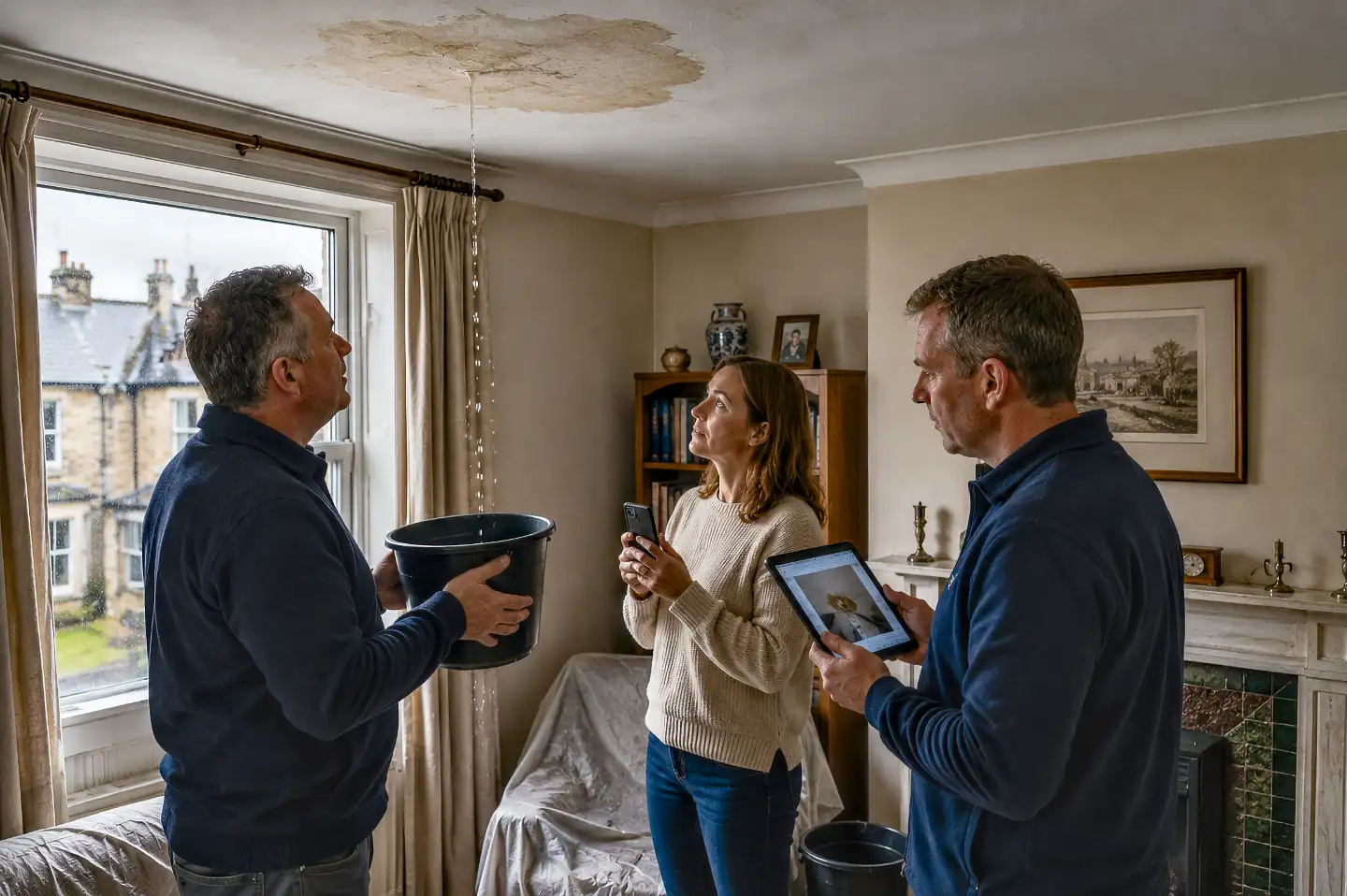
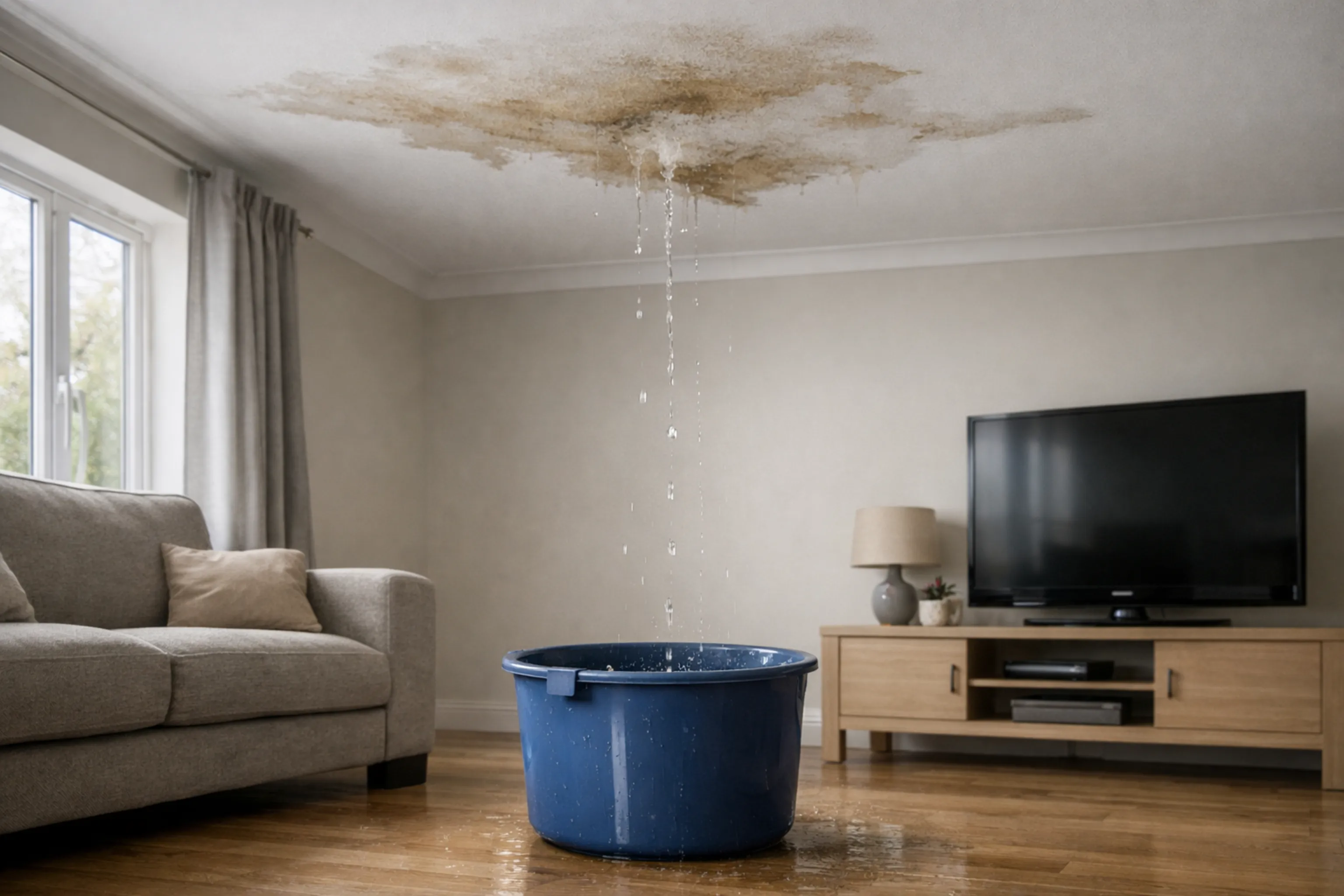
- Make the property safe. If water is coming in, move furniture, place buckets under leaks and switch off electrics if water is near lights or sockets. Do not climb onto the roof yourself.
- Limit further damage. Emergency make-safe work is usually sensible, such as temporary covering or stopping water ingress. Keep receipts for any emergency work.
- Photograph everything before it is cleared away. Take pictures of the roof damage, any fallen branches or debris, internal staining, damaged ceilings, wet carpets and any affected belongings.
- Check your insurance policy. Look for your excess, storm damage wording, emergency repair rules and any time limits for reporting a claim.
- Report the damage promptly. Contact your insurer with the facts, the date of the incident and any evidence you already have.
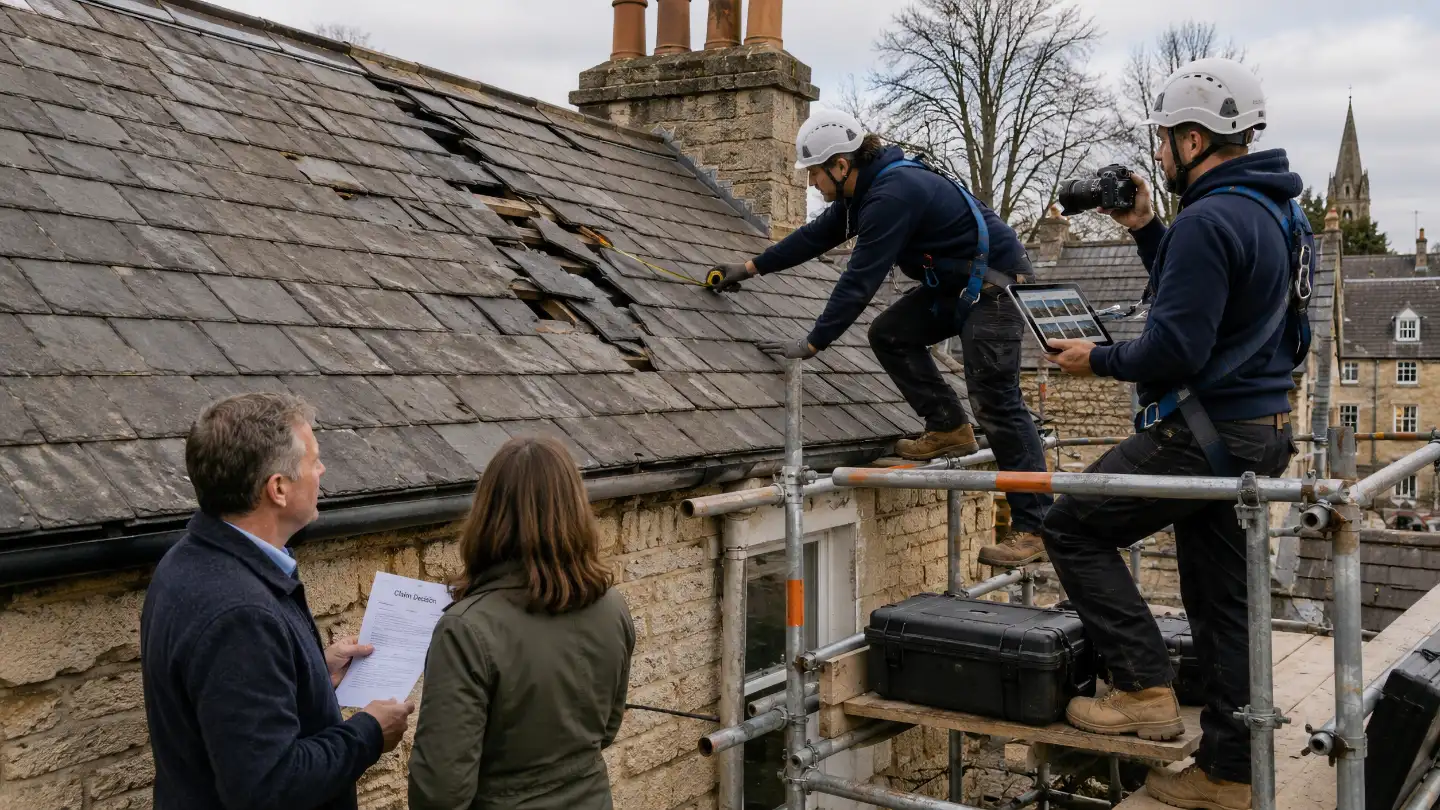
- Get the roof assessed properly. A written roof damage report can help establish the likely cause and the extent of the repairs needed.
If your roof is actively leaking, read our guide to what to do when your roof is leaking in Oxford before arranging permanent repairs.
Need help documenting roof damage? If you would rather have an experienced roofer inspect the damage, take proper photographs and provide a written repair quote for your insurer, Oxford Roof Masters can help with roof damage inspections across Oxford and the surrounding area — and our free Oxford roof insurance claim service keeps your photos, quotes and insurer correspondence in one organised record.
The five mistakes we regularly see after roof damage
Most insurance claims don't become difficult because the insurer is trying to avoid paying. They become difficult because important evidence has been lost before anyone realises it was needed.
After helping homeowners across Oxford with storm damage and emergency roof repairs, we've noticed the same mistakes appear again and again. Fortunately, they're all easy to avoid.
1. Clearing everything away before taking photographs
It's natural to tidy up after a storm. Fallen branches get moved, broken tiles are swept away and damaged possessions are thrown into a skip. Unfortunately, that can also remove some of the best evidence of what actually happened.
Before moving anything, take clear photographs from several angles. Include the roof itself, any fallen trees or branches, damaged gutters, internal leaks and any belongings affected by water. If possible, use your phone's date and time stamp.
2. Carrying out permanent repairs too soon
Many homeowners understandably want the problem solved immediately. While emergency work to prevent further damage is usually expected, replacing the roof before the insurer has assessed the damage can create unnecessary complications.
If temporary weatherproofing is needed, keep every invoice and receipt. Insurers will often reimburse reasonable emergency work carried out to prevent further damage.
3. Assuming every roof problem is storm damage
One of the most common disagreements involves roofs that already had underlying issues before bad weather arrived.
Strong winds may expose an existing weakness rather than actually cause it. That doesn't necessarily mean your claim will fail, but it does mean evidence becomes far more important.
An experienced roof inspection can often distinguish between sudden storm damage and long-term deterioration, giving your insurer a much clearer picture of what has happened.
4. Waiting too long to notify the insurer
Every insurance policy is different, but most expect claims to be reported within a reasonable time. Leaving roof damage unattended for weeks can allow additional water damage to develop, making it harder to separate the original incident from subsequent deterioration.
If you're unsure whether the damage is worth claiming for, it's still worth notifying your insurer and obtaining professional advice.
5. Choosing the cheapest repair without understanding the cause
A roof can often be patched quickly, but unless the underlying cause has been properly identified, the same problem may return during the next period of bad weather.
Insurance companies are generally interested in understanding why the damage occurred, not simply how much it costs to repair.
What insurers are actually looking for
Homeowners sometimes imagine insurance companies send someone looking for reasons to reject claims. In reality, most insurers are simply trying to answer a series of straightforward questions before approving payment.
- What caused the damage?
- Was it sudden and accidental?
- Was the roof reasonably maintained beforehand?
- Has the homeowner taken sensible steps to prevent further damage?
- Do the repair costs appear reasonable?
The clearer the evidence, the easier those questions become to answer.
This is one reason a professional roof inspection can be so valuable. Rather than relying purely on photographs, the insurer receives an independent assessment explaining both the likely cause of the damage and the repairs required.
Can you choose your own roofer?
In most cases, yes.
Many insurers have approved contractor networks, but homeowners are usually entitled to obtain their own quotations and use a roofing company they trust.
For many people, working with a local Oxford roofing company offers several advantages.
- A faster inspection after storms.
- Someone accountable to you rather than the insurer.
- Clear communication throughout the claim.
- Detailed written reports explaining the cause of the damage.
- Properly itemised quotations that insurers can easily review.
We've found that clear documentation often prevents delays later in the claims process. A well-prepared report can answer many of the questions an insurer would otherwise need to investigate separately.
If you're unsure whether your roof damage is likely to be covered, don't guess.
A professional inspection can usually identify whether the damage appears consistent with a recent storm, accidental impact or long-term deterioration, allowing you to make an informed decision before committing to expensive repairs.
How Oxford Roof Masters can help
Insurance claims can feel overwhelming when you're dealing with a leaking roof, damaged ceilings and an insurer asking for photographs, reports and quotations.
Our role isn't simply to repair the roof. It's to make the process as straightforward as possible.
When appropriate, we can:
- Carry out a detailed roof inspection.
- Photograph the damage clearly.
- Provide a written report explaining the likely cause.
- Prepare a detailed repair quotation suitable for your insurer.
- Carry out emergency make-safe work where required.
- Complete permanent repairs to a high standard.
- Work directly with many insurers, meaning you will often only need to pay your policy excess.
If the damage isn't covered because it results from age or wear and tear, we'll explain why in plain English and provide an honest fixed quotation for the work instead. There is never any pressure to proceed.
You can also read our Oxford roof repair cost guide if you'd like a realistic idea of repair costs before speaking to your insurer.
Final thoughts
Most successful roof insurance claims aren't won because somebody knows insurance law.
They're successful because the damage was properly documented, the roof was made safe, the insurer received clear information and the repairs were supported by good evidence.
If you've recently experienced roof damage in Oxford or the surrounding area, taking a little extra care during those first few hours can make the entire process significantly less stressful.
And if you'd rather have someone experienced guide you through it, we're always happy to help.
Need advice about roof damage?
Whether you're ready to make an insurance claim or simply want an experienced opinion before contacting your insurer, we're happy to inspect the damage, explain your options and provide straightforward, honest advice.